
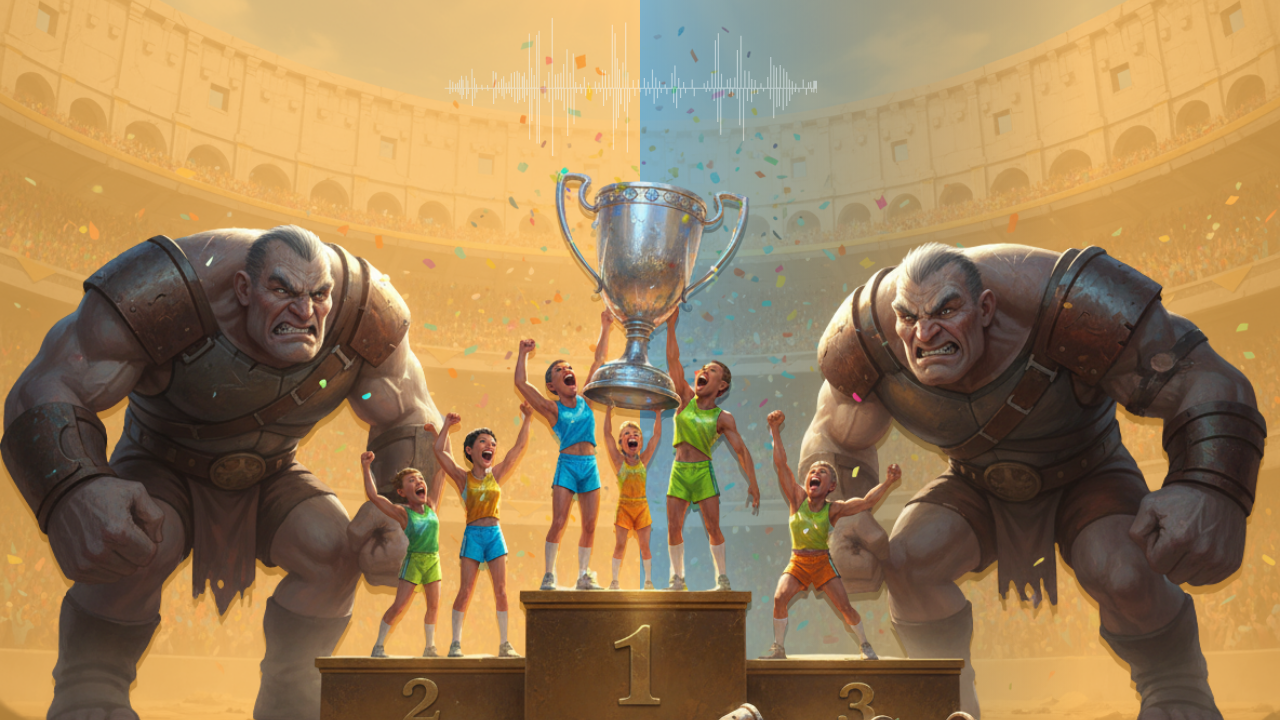
Independence is a superpower.
Most brands don’t initially think of themselves as “indie podcasters,” but that’s exactly what they are when they launch their first show. And that’s not a disadvantage. In many ways, it’s the secret edge that the biggest podcasts simply cannot access.
This article explores why brand-built podcasts thrive when they embrace their independent status, how indie tactics translate into real marketing wins, and how to get started with the right support from a podcast production agency, podcast editing agency, or podcast creation agency.
Along the way, we’ll answer essential questions like What are the best podcast production services?, How do I start a podcast?, and How do I set up and distribute a podcast?
I sat down recently to talk with James Griffin about these ideas. James’ experience in indie rock and independent podcasting brings valuable insight into why this space works so well for brands. The full video of that conversation is here.
The Indie Advantage Brands Often Overlook
When people think about podcasting, they picture the giants: celebrity shows, network productions, massive budgets, marketing machines. But those shows are the minority. They represent the tip of the iceberg.
Most of the innovation, creativity, and loyal listenership happens further down—where independent creators live.
“If you’re small, you can move fast,” James notes. “Big shows just can’t take risks the same way.”

And this applies directly to brands.
A branded podcast, at its beginning, is as indie as it gets. You likely don’t have a network behind you. You don’t have the resources of a media conglomerate. You don’t have a $30,000-per-episode budget.
What you do have is control. Speed. Creative freedom. The ability to experiment and build a community instead of chasing mass-market numbers.
And that’s exactly where independent podcasts shine.
Indie Podcasts Win on Trust and Connection
Most large podcast networks serve millions of listeners, but they struggle to maintain intimacy. Ads, format constraints, and corporate expectations create distance between the hosts and the audience.
Indie podcasts don’t have that problem. They build trust faster because listeners feel closer to the creator.
This is gold for brands.
You’re not trying to become the next Joe Rogan. You’re trying to reach the right people, clients, customers, partners, or decision-makers, consistently and authentically. A highly engaged niche audience will outperform a passive mass audience every time.
James captures this perfectly:
“Real connection is easier when everything isn’t polished to perfection.”
An independent brand podcast can:
-
speak directly to a specific audience
-
build a community instead of a crowd
-
deliver personality instead of corporate messaging
-
foster two-way engagement through email, socials, and events
Your independence makes this possible.
Guerrilla Marketing Tactics That Only Indie Shows Can Use
Independent creators don’t rely on huge ad budgets. They win through creativity, resourcefulness, and unexpected tactics that create memorable brand moments.
Brands can borrow directly from these indie strategies:
1. Micro-community distribution
Share episodes inside small, targeted groups where your audience already hangs out—Slack channels, LinkedIn groups, alumni organizations, professional associations.
2. Physical touchpoints
From QR-coded business cards to postcards, products, and packaging, physical triggers still work. A small brand can build intimacy through offline placement.
James highlights this mindset:
“Indies survive by doing the things big shows would never bother with.”
3. Collaborator stacking
Partner with guests who have niche but loyal followings. Their audience often cares more than the audience of a celebrity guest.
4. Email-first loyalty loops
Unlike most media brands, you can build your email list from day one, giving you direct ownership of your audience without relying on Apple or Spotify algorithms.
5. Creative experimentation
Indies can test unusual formats: minisodes, narrative storytelling, behind-the-scenes content, or rapid series bursts.
A brand podcast, especially one supported by a strong podcast production agency, can deploy these tactics immediately.
Why Brands Should Act Like a Podcast Creation Agency
Think of your brand as its own podcast creation agency.
Here’s what that means:
-
You’re building intellectual property
-
You’re constructing a library of evergreen content
-
You’re giving people a reason to spend time with your brand
-
You’re showcasing expertise and values through conversation rather than advertising
Many brands underestimate the strategic power of owning their own media channel.
But the brands succeeding with podcasts today treat them like long-term creative assets—not marketing experiments.
That’s exactly how indie creators operate too.
If you want help building this foundation, partnering with a podcast production agency or a podcast editing agency can accelerate everything, from your workflow to your sound to your growth strategy.
How Do I Start a Podcast? (The Brand Edition)
Starting a podcast is simpler than most brands expect.
Here’s the short roadmap:
1. Establish your premise
When you think of habits you probably think of James Clear.
When you think of vulnerability you probably think of Brené Brown.
What’s your premise?
2. Format
Pick a format that matches your brand’s goals: interviews, conversations, thought leadership, narrative storytelling.
3. Position your audience
Who are you talking to? What problem do you help them solve? What makes your show worth their time?
4. Choose your workflow
You can DIY it, or work with a podcast production agency to handle scripting, recording, editing, and publishing.
5. Record simply but consistently
You don’t need a studio. A good USB mic and a quiet room can create professional audio, especially with the help of a podcast editing agency.
6. Publish everywhere
Distribute your show on Apple Podcasts, Spotify, YouTube, Amazon, and more.
You don’t need perfection. You need a consistent voice and a reason for the listener to come back.
How Do I Set Up and Distribute a Podcast?
Distribution feels intimidating, but it’s not.
A typical setup looks like this:
-
Choose a hosting platform (Buzzsprout, Podbean, RSS.com).
-
Upload your episode and artwork.
-
Your hosting platform generates an RSS feed.
-
Submit that RSS feed to podcast apps once.
-
From then on, episodes distribute automatically.
A good podcast production agency will set all this up for you and walk you through how to monitor downloads, engagement, and listener behavior.
What Are the Best Podcast Production Services?
The “best” services depend on your goals. Most brands look for a combination of:
-
Strategy and concept development
-
Recording support and equipment guidance
-
Editing, mixing, and sound design
-
Content repurposing (social clips, blogs, reels, newsletters)
-
Publishing and distribution
-
Performance reporting
-
Audience development and marketing
If you don’t have in-house capacity, choosing a partner matters. You want an agency that acts as collaborator, coach, producer, and strategist—not just an editor.
Why Independent Is the Perfect Place to Begin
Brands often imagine a “finished product”: polished, big, high-budget.
But that’s not where success starts.
Success starts with independence.
Independence lets you:
-
experiment without pressure
-
speak honestly
-
build community
-
learn fast
-
grow into your audience
-
shape the show around what listeners respond to
Indie is not a phase. Indie is where everything good begins.
And with the right support, from a podcast production agency, podcast editing agency, or podcast creation agency, your brand can move faster, create better content, and build a show that actually grows.
Independent podcasts aren’t the underdog.
They’re the engine of creativity that keeps the whole medium alive.
Your brand belongs there too.