
What They Are. Who Uses Them. Where They Break.
Synthetic populations are showing up everywhere.
In media reports.
In research decks.
In confident claims about where audiences are headed next.
But most people in podcasting don’t know what they are.
Or why they matter.
Or when they should be ignored.
This is a short guide. Written for podcast people. Not statisticians.
Download a full white paper from Statista on synthetic populations.
We’ll start with a simple definition. Then we’ll move to the real question.
What does this have to do with independent podcasters, podcast agencies, podcast networks, and podcast researchers.
What is a synthetic population?
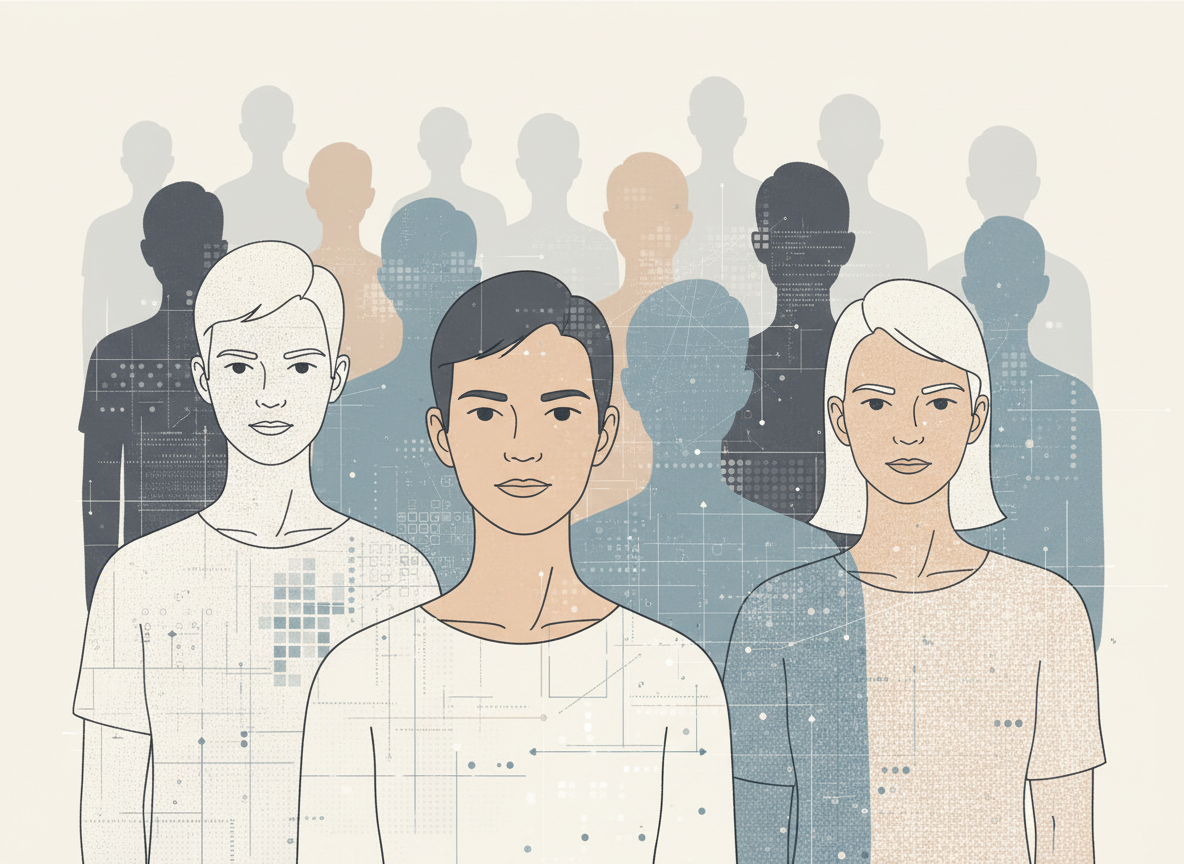
A synthetic population is a model.
It’s a dataset that mimics a real society.
Not real people.
Real patterns.
Think of it as a population-level stand-in. It’s built from census data, surveys, and other large datasets. Age. Income. Geography. Household structure. Media behavior. The synthetic individuals don’t exist, but the overall picture mirrors reality.
Statista describes synthetic populations as privacy-compliant representations of real populations. The focus is on statistical structure, not personal data. Patterns matter. Individuals don’t.
This matters because traditional research hits limits fast. Especially in fragmented markets. Niche audiences. Regional groups. Surveys get expensive. Panels thin out. Timelines shrink.
Synthetic populations offer a way to test ideas quickly. To run scenarios. To estimate scale. All without talking to a single real person.
That’s both the promise and the problem.
Next is how this might, or might not, matter for everyday podcasters. Then agencies. Then networks. Then researchers.
How an independent podcaster might use synthetic populations
Most independent podcasters won’t use synthetic populations directly. They won’t log into a dashboard or run simulations. That’s not realistic.
But independent podcasters will still run into them. Through platform reports. Through industry research. Through advice that sounds authoritative.
Where synthetic populations can help is during moments of choice. When a creator is deciding whether a niche is large enough. Whether a regional audience exists. Whether a concept aligns with a specific life stage or income bracket.
The model can offer a rough signal.
Not certainty.
Not proof.
Used well, synthetic populations act like a compass. They point in a direction. They don’t tell you how to get there. And they definitely don’t tell you whether people will care.
For independent podcasters, real listeners still matter more. Emails. Messages. Download trends. Retention curves. Those signals beat any model.
How podcast agencies might use synthetic populations
Podcast agencies live in the land of early decisions. Proposals come before proof. Strategy comes before results. Clients want answers now.
This is where synthetic populations become tempting.
A podcast agency can use synthetic populations to stress test ideas before money moves. They can model potential reach by age, income, geography, or lifestyle. They can simulate what happens if a campaign shifts from video clips to audio ads. Or from national to regional targeting.
This helps answer one question.
Is this worth exploring.
It doesn’t answer another.
Will people love it.
For a podcast production agency, this kind of modeling can be useful during early planning conversations. Especially when advising clients on whether to launch a show, expand distribution, or enter a new market. It adds structure where instinct usually rules.
But here’s the danger. When synthetic insights harden into certainty. When modeled reach starts to sound like guaranteed demand.
A smart podcast production agency treats these models as decision support, not decision makers. They inform strategy. They don’t replace judgment.
Podcast agencies that forget that difference tend to overpromise. And underdeliver.
How podcast networks might use synthetic populations
Podcast networks think in portfolios. They think in growth paths. They think in scale.
Synthetic populations fit that mindset well.
A network can use these models to estimate how many people fit a target listener profile. Where those listeners are concentrated. Whether a niche is underserved or already crowded. This is especially useful when panels and surveys struggle to capture small or fragmented audiences.
For a podcast production agency working closely with a network, synthetic populations can support expansion decisions. What genres to explore. Which regions to prioritize. Which audiences may justify a new show.
But networks face the same risk as agencies. Mistaking plausibility for inevitability.
A modeled audience may exist on paper. That doesn’t mean it will show up. Or stay. Or care enough to build habit.
Networks that succeed treat synthetic populations as a map. Not the terrain.
How podcast research firms might use synthetic populations
Podcast research firms sit closest to the data. They also carry the most responsibility.
Synthetic populations can be powerful here. Used correctly.
Research firms can use them to validate survey findings. To test whether results plausibly scale across a full population. To explore regional differences. To expose where surveys underrepresent certain groups.
Statista is clear on this point. Synthetic populations are meant to complement traditional research, not replace it.
For a podcast production agency that relies on third-party research, this distinction matters. Synthetic models can strengthen conclusions. They can also hide weaknesses if used carelessly.
Good research firms show their assumptions. They explain limits. They resist turning models into headlines.
Bad ones smooth everything over. And sell confidence.
The caution. What synthetic populations can’t do.
Synthetic populations struggle with emotion.
With habit.
With trust.
With cultural nuance.
Statista says this plainly. Human behavior doesn’t follow rules perfectly. Irrational choices matter. Experience driven decisions don’t scale neatly.
That’s a problem for podcasting.
Podcasting is built on routine. On voice. On intimacy. On showing up week after week. Models can approximate behavior. They can’t explain why someone listens while doing dishes. Or walking a dog. Or driving home.
This is where claims break down. Claims that video replaces audio. That platforms matter more than people. That “shows” matter more than habits.
A podcast production agency that understands this won’t panic at every trend report. They’ll ask better questions. What behavior is being modeled. And what behavior is being missed.
Because synthetic populations are great at telling us where audiences could be.
They’re far worse at explaining why listeners stay.
Final thought
Synthetic populations aren’t bad. They’re useful. Sometimes very useful.
But podcasting isn’t a spreadsheet medium. It’s a human one.
Independent podcasters should treat models lightly.
Podcast agencies should treat them cautiously.
Networks should treat them strategically.
Researchers should treat them responsibly.
And every podcast production agency should remember the same rule.
Models can point the way.
Listeners decide whether you get there.