
Podcasting is crowded.
New shows launch every day. Good content is not enough anymore. And the idea of “Build it and they will come…” that doesn’t work anymore. To grow, you need a clear growth strategy, a strong connection with your podcast audience, and simple systems that help people find and stay with your show. This guide focuses on deeper engagement, smarter podcast marketing, and long term growth you can repeat each week.
The New Podcast Landscape
Discovery is harder now. Podcast listeners have endless choices and little time. Your show must give value fast and keep people interested from the start of each new episode. Basic tactics are not enough. You need a sharp message, a clean structure, and content that solves real problems.
The Saturation Challenge
Millions of podcasts live on Spotify, Apple Podcasts, and YouTube. Listeners scroll fast. They pick a show when the value is clear in one sentence. This means your podcast description must be simple, strong, and written for the exact group you want to reach.
The world’s biggest podcasts also have very large budgets. Many spend over $30,000 USD per episode. They invest in editing, promotion, guest booking, and ads. This means you should spend what you can affordably. Do not be afraid to pay to play when you can. The most successful shows do exactly that.
Beyond Algorithms
Algorithms reward engagement. Retention matters more than reach. You build retention through strong hooks, clear structure, and real connection with your podcast audience. When people trust you, they stay longer and share your work.
Four Pillars of Modern Podcast Growth
1. Strong Content
Strong podcast content is your foundation.
Use simple, valuable ideas. Speak to one group. This creates clarity for people and for search engines. Good SEO, which means search engine optimization, makes it easier for new listeners to find you.
Use clean episode titles. They should be short, easy to search, and focused on one clear idea. Strong titles improve SEO inside podcast apps and on the open web.
Keep your sound clean. Listeners leave when audio feels sloppy.
Create content people can share. Break big ideas into small, simple points. This helps with short-form podcast promotion, because it gives you easy clips and quotes.
And a little secret, learn (or find someone who knows) sound broadcasting principles. Things like “don’t go more than 30 minutes when you’re first starting because it’s near impossible to get people past the second quarter.” That’s an old radio adage from almost a century ago… and it’s still true, particularly for new starters. You need to earn that extra time from your audience and they will tell you when you can go longer.
 2. Smarter Distribution
Posting your episode is not enough. You must meet people where they already spend time.
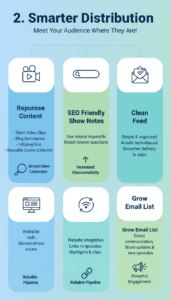
Turn each episode into several assets. Make a short video podcast clip. Write a simple blog-style summary. Create an infographic. Share quotes with hashtags on LinkedIn. These pieces bring in potential listeners and a new audience without recording more.
Use SEO friendly show notes. Use keywords that match your listeners’ questions. This helps search engines understand your content.
Keep your RSS feed clean and simple. Your RSS feed is the pipeline that sends your content to every app. A clean feed helps avoid issues and supports smoother discovery.
Create a basic landing page on your website. Include links to your episodes, your email signup, your clips, and a few highlights. A landing page makes it easy for people to share your show with others.
Grow your email list. Email marketing is still one of the strongest tools in podcast marketing. Use it to share your next new episode, behind the scenes notes, or simple giveaways that reward engaged listeners.
Partner with creators who speak to similar audiences. Swap promos. Guest on each other’s shows. Trade clips. This drives highly aligned traffic.
3. Data That Drives Decisions
Data keeps you on the right path.
Watch your metrics often. Look at drop-off points. Look at what clips perform best. Study which episode titles get the most clicks. These metrics tell you what people want next.
Ask people what they want more of. Use polls. Invite questions. Bring listeners into the process. This builds trust and improves retention.
Test small changes. Try shorter intros. Try new calls to action. Try new short-form podcast promotion clips. These changes stack over time.
Plan your content based on what works. If certain topics bring in a new audience, build more around those themes.
4. Monetization That Supports Growth
Monetization is more than income. It is a way to fuel growth.
Offer bonus content or early access. Create simple guides or workshops. Use affiliate links for products you trust.
Reinvest part of your revenue. Upgrade editing. Improve artwork. Create better short-form content. Hire help for tasks that slow you down. Even small investments can speed up your progress.
Remember the note from earlier: some top podcasts spend 30000 USD or more on each episode. You do not need that level of spending, but you should invest at a level that feels sustainable. Pay to play is normal. It works.
Common Challenges and How to Handle Them
Burnout
Podcasting is a lot of work. Burnout stops growth.
Batch your tasks. Use templates for your titles, notes, and clips. Outsource editing or posting when you can. Protect your time.
Technology Changes
New tools arrive fast. Some matter. Some do not.
Try tools that make your workflow simpler. Ignore tools that distract you. Look for tools that help with audio, SEO, video podcast creation, or promotion.
Standing Out
Standing out means being clear.
Know your unique angle. Use it in your intro, your artwork, your episode titles, and your clips. Serve a gap in the market. Clarity helps people choose you.
 Three Models of Advanced Growth
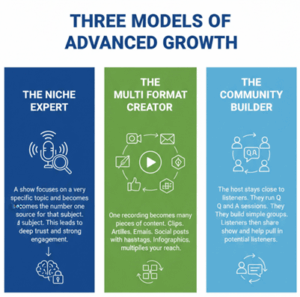
The Niche Expert
A show focuses on a very specific topic and becomes the number one source for that subject. This leads to deep trust and strong engagement.
The Multi Format Creator
One recording becomes many pieces of content. Clips. Articles. Emails. Social posts with hashtags. Infographics. This multiplies your reach.
The Community Builder
The host stays close to listeners. They run Q and A sessions. They build simple groups. Listeners then share the show and help pull in potential listeners.
A Simple Path to Implementation
Step 1: Review Your Show
Look at your metrics. Listen to your own episodes. Set clear goals for the next three months.
Step 2: Improve Your Core Content
Use strong hooks. Improve sound. Use SEO friendly episode titles. Make your message simple and clear.
Step 3: Expand Your Reach
Share clips. Write summaries. Use hashtags. Improve your landing page. Grow your email marketing list. Use giveaways to spark new interest.
Step 4: Review and Adjust
Look at results every month. Test one new idea at a time. Keep what works. Remove what does not.
Looking Ahead
Podcasting will keep changing. New tools will rise. Listener habits will shift. What stays the same is the need for strong content, clear strategy, and consistent promotion across platforms.
Final Thoughts
Advanced growth comes from clarity, consistency, and connection. When your podcast audience trusts you, they stay longer and share your show. When you use strong podcast marketing, clean episode titles, a solid podcast description, SEO, a good landing page, and steady short-form podcast promotion, you attract a new audience again and again. Add in smart investment, even small amounts, and you give your show every chance to grow.