Lady Emily [00:00] Welcome to Stories and Strategies. In this episode, we're looking at the gap between knowing AI ethics and actually practicing them. That's the strategy.
Doug Downs [00:13] Dr. Atul Gawande is a surgeon at Brigham and Women's Hospital in Boston, a good one. He also writes for the New Yorker, and he spent years studying why smart, deeply trained people still made mistakes. Here's what he found. In operating rooms around the world, surgeons knew exactly what to do every step. They had the training, they had the judgment, they had the years, and still patients were dying from infections. A simple round of antibiotics would've prevented. From sponges left inside bodies, from steps skipped, not because someone didn't know, but because the work was complex and fast and human memory is not a system. So Dr. Gawande borrowed an idea from pilots and builders, and in 2008, he helped the World Health Organization trial something called the Surgical Safety Checklist. 19 items, confirm the patient's identity, give the antibiotics, count the sponges. Surgeons hated it. I mean, the best hands in medicine, reading down a list like student drivers, and then the results came in.
Published in early 2009 across eight hospitals around the world, complications fell by more than a third. Deaths fell by nearly half. Nothing about what surgeons knew had changed, only whether they did it. Today on Stories and Strategies, the checklist for the rest of us, what happens when you know the ethics and the pressure says skip them anyway?
My name is Doug Dows here at PRSA Icon in Orlando, Florida. Marlene Neill, it's great to connect with you and you're getting ready for your keynote. As you and I speak, you're getting ready for your keynote address that's coming up.
Marlene Neill [02:12] Yes, I'll have a session later this afternoon.
Doug Downs [02:14] Okay, Marlene, just a little bit about you. You have your PhD, you're APR, you're a fellow with PRSA and the graduate program director in journalism, public relations, new media at Baylor University. Ethics in PR is where you've been focusing so much of your attention. Thank you for doing that because this is really a critical point. I've spent a lot of my time today talking with young people about how they feel getting into the PR industry when AI is like this dragon that's gathering steam and it inevitably comes down to ethics that best it can do is codify. It can never determine ethics at any point. Tell me about ethics in PR.
Marlene Neill [02:57] So everybody is talking about how that's one of the things that AI cannot do is actually have empathy, make ethical decision making. So while these tools seem like they can do some amazing things, there are some limitations and we do still need that human in the loop as everyone talks about.
Doug Downs [03:13] We talk about that, and yet I know there are very senior PR practitioners who will say, "Well, I tell my CEO, we really ought to be going left here for ethical reasons." And the CEO will say, "Well, that's not what ChatGPT says." So we're facing a battle right now.
Marlene Neill [03:31] Well, some have talked about the fact that sometimes they will get certain advice from their agents and they do have to hold up that mirror and talk about what will be some of the potential consequences of actions if you do not make ethical decisions along the way. So it is important that we take time to provide that counsel, but it also needs to be grounded in facts and case studies so that when we provide that counsel, it does have that credibility.
Doug Downs [03:57] Okay. And that's part of the critical thinking that we need to do so badly. Can we not codify the AI to walk through those case studies or is the AI the tool that helps us find what are legitimate and not legitimate case studies? Tell me about the critical thinking aspect.
Marlene Neill [04:13] Well, so as I've done interviews for a couple of different studies, everyone has been talking about the fact that the outputs will sound quite convincing, and you do have to have that intellectual curiosity to stop to review the results and make sure that this is actually accurate. There was an example that someone shared with me where she trained an agent in Claude and it was doing quite well. And so she was starting to get that trust and then it was just a simple task such as rewriting a bio. But what happened is the AI tool added a position that she never had. And fortunately, she was being diligent enough to check the results and recognize that, hey, that is not accurate. So it is important that we do pause and take the time. Even though there's that pressure to produce information quicker with these tools, we have to take the time to evaluate it.
And I've tried using some of the tools myself in my teaching and in my research. And there was one time I was just creating an infographic and I noticed what was a culturally offensive image in the infographic as well as typos and spelling errors. And so you do have to make sure that you are reviewing that content because ultimately we are responsible for the output that we share with the public. If we do not check it well, then that's going to be on us, that mistake.
Doug Downs [05:33] The big shift these days is toward value-based models, rather than time-based models. A lot of agencies are shifting away from billing on the hourly, whether it's that 150 or the 200 per hour. I've got a client myself, we write a blog article and do some social media work for them, and we've always done this, quite frankly, for me to do it by the hour now.
Marlene Neill [05:56] Right, doesn't that make sense?
Doug Downs [05:57] I can't pay my staff.
Marlene Neill [05:58] Right.
Doug Downs [05:58] Right. So tell me, and this is really a big question, the value-based wedge that PR practitioners need to find and staying ethical. I still need to make a certain amount of money, pay my staff to pay for my systems, and I think it's fair based on the seniority that they get at.
Marlene Neill [06:19] And so that's where you have to provide that strategic insight. And so I've been doing some different research for the Page Society, also focused on AI, and they were talking about the fact that they don't want to just hire agencies to do something that a junior staffer could do or AI tool could do. And so they're really looking for AI tools, I'm sorry, for their staff members that is, to provide more strategic insights, the thought leadership, the crisis strategies, but they're really wanting that higher level thinking because that is what the tools are not capable of accomplishing for them.
Doug Downs [06:56] Marlene, agencies hate that. They like rolling out the senior people in the first meeting before they've signed the contract, and then the rest of the way you get the mid-staff or the junior staffer. In my experience with a lot of bigger agencies is, my goodness, that's the model. I don't see the senior person again until the Christmas party.
Marlene Neill [07:12] But then the clients are saying, "We can use AI to do this and we don't need you." And so that's what we were hearing from the executives that I was talking to chief communications officers, senior executives in corporate communications, and corporate affairs, I know is the way they a lot of times refer to that function, and they're saying, "We're not going to pay for that." And so they're looking to cut their budgets maybe in half with their agency spending because they do want to instead have the outside support for those higher level counseling.
Doug Downs [07:50] Where does that leave agencies then? I've heard one person say on our podcast, "The biggest agencies won't suffer and the small ones that compete basically on price, they won't suffer, but the mid ones, the mid ones are in for some churn here." Do you agree with that?
Marlene Neill [08:05] I don't have enough information based on the research I'm doing to comment on that, but I will say that they tended to value some of the smaller agencies where they were able to work with specialized counselors that could provide that strategic insight. And crisis communication was an area where they still valued outside support, but for translation services, for lower level writing assignments, they're depending more on the AI tools and not outsourcing that as much.
Doug Downs [08:38] Are you optimistic that we will proceed in this industry in an ethical manner toward AI or are you realistic about, boy, we're going to have some course corrections here along the way and they might well be very, very public, some of them?
Marlene Neill [08:53] Well, I think we're already seeing that. We've seen the mistakes happening along the way as everyone's figuring out how best to use these tools. So there have been examples where there were companies that used AI to create diversity in a campaign rather than hiring diverse models. Those have been crises that have been revealed. Using AI to write apology statements following a crisis and people realizing that it did not sound authentic or sincere. So we do see those mistakes happening, but I'm hoping that as there's case studies out there that senior executives can use those examples and share them as they're providing counsel to say, "I'm not just saying this because I think this might be the case. Here are some case studies, some examples I can share with you of times that people didn't do it right and what happened based on that." So I'm hoping that over time that these will serve as lessons for all of us on how to responsibly use the tools.
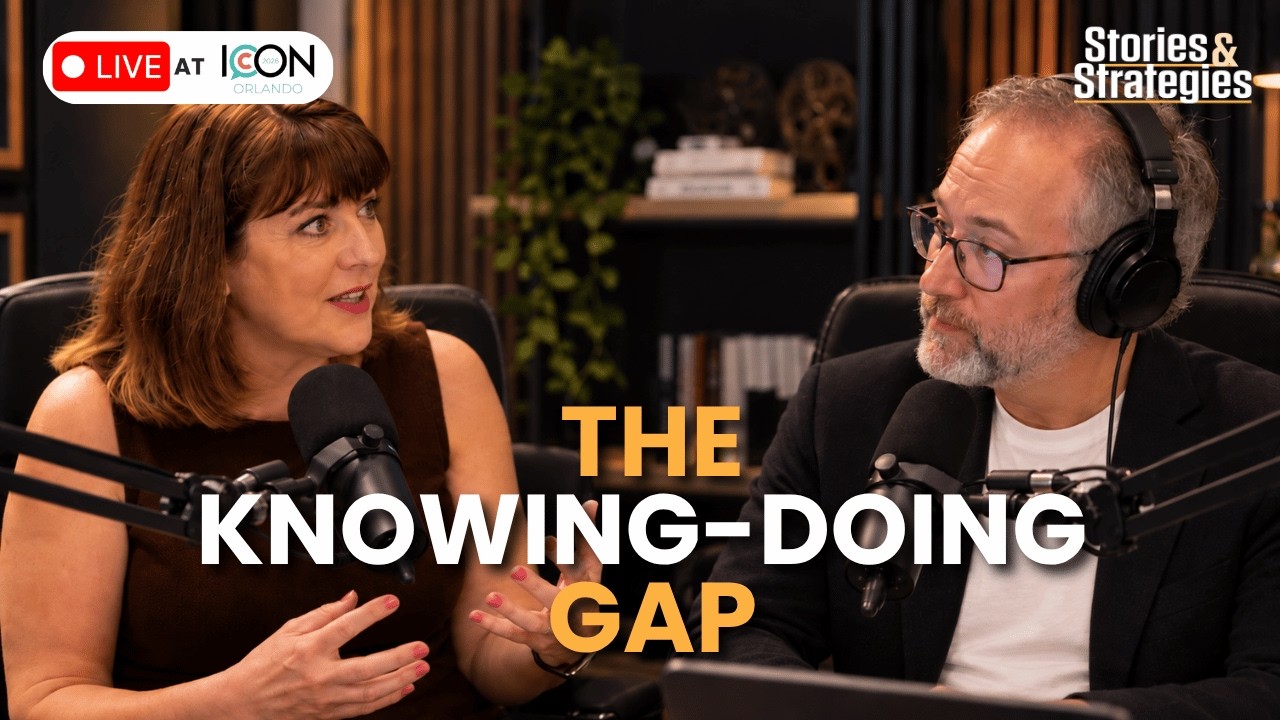
Doug Downs [09:46] Okay. And then there's the knowing, doing gap.
Marlene Neill [09:50] Yes.
Doug Downs [09:51] Tell me what the gap is and what does it mean to solo practitioners?
Marlene Neill [09:55] So this is drawing from some research I did on ethics and compliance training that was recently published that conducted on behalf of the Arthur W. Page Center. And what I was finding is these companies that have these trainings, they tend to be online training modules that everyone completes annually. You're probably quite familiar with that aspect that we go through our annual training, it's kind of a check the box approach where people do that once a year, okay, I'm done. And they're not really that engaging and it's not impacting behavior. And so as we think about that knowledge and gap is we talk about ethics, we have trainings in that from time to time, but it doesn't always impact behavior. And unfortunately what I was finding in my research is that about a third of the employees, this is specifically in US agencies, this is a national sample of agency employees, and about a third of them said they were facing retaliation and remaining silent when they were seeing ethical issues in their organizations.
So there's a real problem there. And so that's what that knowing and doing gap is referring to the fact that we do have these trainings, we talk about ethics, but it's not always impacting behavior. And specifically around AI, building the competencies, fortunately, and I'm a little long here, so let me know if you need to shorten it.
Doug Downs [11:14] Keep
Marlene Neill [11:14] Going. No. But the situation is, I'm a big fan of this program called Giving Voice to Values. I was exposed to that as a graduate student and learned about their approach to ethics training. Mary Gentile was the professor that developed this curriculum, and there's a lot of resources available based on that name and books and case studies. But what's different about their approach is they don't have you just figure out what the right thing is to do. They have you think about developing a response plan so you actually know and have thought through what you would do if you actually face these dilemmas. And so not thinking about just what is the right thing to do, but what action should I take? And I really like that approach, and I use that in my classes where we have students not only think about what is the right thing to do, but what can I do?
What will be some of the rationalizations that people around me will use to justify unethical behavior? And then what persuasive approaches can I use to counter that? So as I mentioned previously, using case studies to back up your recommendation, doing research to have facts and figures to back up your recommendations, recruiting an ally and going together raise your concerns because you can't just go up to someone and say, "You're being unethical, you're wrong," because people get defensive. And so you have to actually spend some time thinking through what approach can I use, of course, being ethical in the approaches you use, but thinking about what technique, what persuasive approach can I use that I can get this point across to this other person, thinking about it from their perspective and what is going to both best resonate with them when it comes to articulating what is the right thing to do.
Doug Downs [12:53] This almost feels like the apex of the next problem because at the same time, you mentioned the silence and that people are choosing silence. I saw in other studies as brands are quite deliberately choosing silence because we're afraid to speak out in 2026. Is that really the hurdle that we need to get over, that perhaps we understand and agree on most ethics having shared values, but that we're going to stay silent at the wrong times?
Marlene Neill [13:20] I do think right that it is difficult to actually have the courage to speak up. But one thing going back to my very first study that I did is there were public relations professionals that talked about how is our own credibility on the line. When you think about public relations, we tend to be the voice and face for the brand, and so it is your own credibility on the line. And so being willing to speak up when something does not sit with you right, that it conflicts with your own values and being true to your core values. And that of the organizations, one of the best techniques that people have suggested when raising an ethical concern is tying it back to the organization's core values because they've already adopted that and believe in that. And so if you can tie it back to, is this consistent with our core values, that's more powerful than saying, "This is just not ethical.
I disagree with this." And that's when people become defensive. And that's why I said I really like teaching students about thinking through your action plan, thinking about what rationalizations people may use for unethical behavior, and then how to counter that.
Doug Downs [14:22] Yeah. And that's been public relations, at least since 2001 when I got into the industry, it was tied back to the business strategy and what you're saying, the mission statement and values that are
Marlene Neill [14:34] At
Doug Downs [14:34] Your top. Exactly. So that places even more importance on executive leaders in designing mission statements and values that don't just say the same things every single time. We're for everybody and we want the environment to do well and diversity and inclusion. Some of these sound like cookie cutter things that ChatGPT wrote based on a competitor's mission statement and values.
Marlene Neill [14:59] Again -
Doug Downs [14:59] They need to be a bit more precise and have a bit more meaning.
Marlene Neill [15:02] Well, and beyond that, what people have said in my research over the years is they cannot be aspirational and they need to be true to who you are as an organization because if you have values that are aspirational and you're not living them out, you have no credibility with your employees. It has to be something that's not only written on paper, but something that's lived out in the organization.
Doug Downs [15:22] Thank you so much for your time. Good luck in the keynote tonight.
Lady Emily [15:25] Thank you. Thank you. Thank you, Marlene, and good luck with the keynote. Here are three shareable moments I got today from Marlene Neill. Number one, knowing isn't doing. The surgeons and Atul Gawande study knew every step and patients still died from skipped ones until a 19-item checklist cut deaths nearly in half. AI ethics work the same way. The tools can codify the rules, but only you can practice them. Number two, verify everything the machine gives you. A bio rewritten with a job never held, an infographic with an image no one should have published. It all sounded convincing and it was all wrong. Pause, check, and remember that you own whatever goes out under your name. And number three, rehearse your courage before you need it. Don't just decide what's right. Plan what you'll actually say, expect the rationalizations, bring an ally, and tie your concern to the organization's core values, the ones it lives, not the ones it frames.
A third of agency employees stay silent when they saw something wrong. Don't be the silence. If you'd like to send a message to our guest, Marlene Neill, we've got her contact information in the show notes. Stories and Strategies is a production of Stories and Strategies Podcast. If you liked this episode, please leave a rating and possibly a review. Thank you to our awesome host, Doug Downs. And lastly, do us a favor, forward this episode to One Friend. Thanks for listening.