

🚨 Can AI train on your podcast without asking?
Short answer: publishing your podcast does not automatically give permission to AI tools like ChatGPT from OpenAI, Gemini from Google, Claude from Anthropic, or Perplexity from Perplexity AI.
What’s happening: a new draft law in the U.S. would require these AI companies to get explicit permission before scraping podcasts, transcripts, or show notes to train models or generate summaries.
Why it matters to podcasters: your transcript is valuable content. Under this proposal, major AI platforms could not legally pull it for training or substitute summaries unless you clearly opted in.
Important distinction: letting people listen or read your content is not the same as allowing AI systems to harvest it.
Also key: general website terms or the fact that your podcast is publicly available would not count as consent.
What could change: podcasters may soon need to actively decide whether companies like OpenAI, Google, Anthropic, and Perplexity can use their content and on what terms.
The big takeaway: silence would mean no permission.
Worth watching: this is not law yet, but it signals where creator leverage may be heading.


Browser Usage Up - Spotify Down
Browser-based listening is climbing fast, and Buzzsprout’s January 2026 platform stats put Web Browser at 11.9% of all downloads. Compared with January 2025, that browser total is up about 51%, using Buzzsprout’s own month to month figures.
Over the same period, Spotify’s Buzzsprout measured downloads are down about 25% year on year (any podcast uploading video instead of audio to Spotify isn’t trackable).
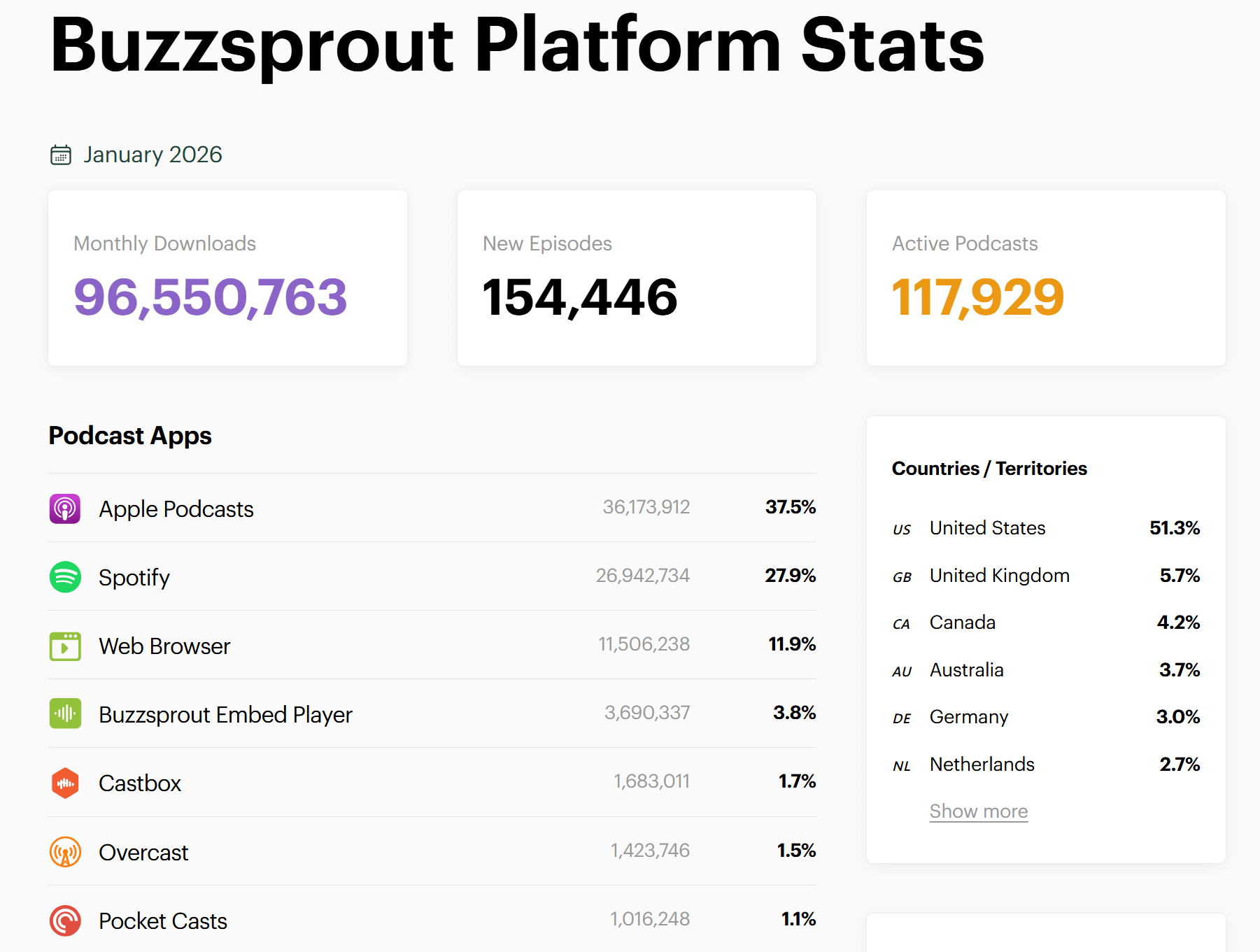
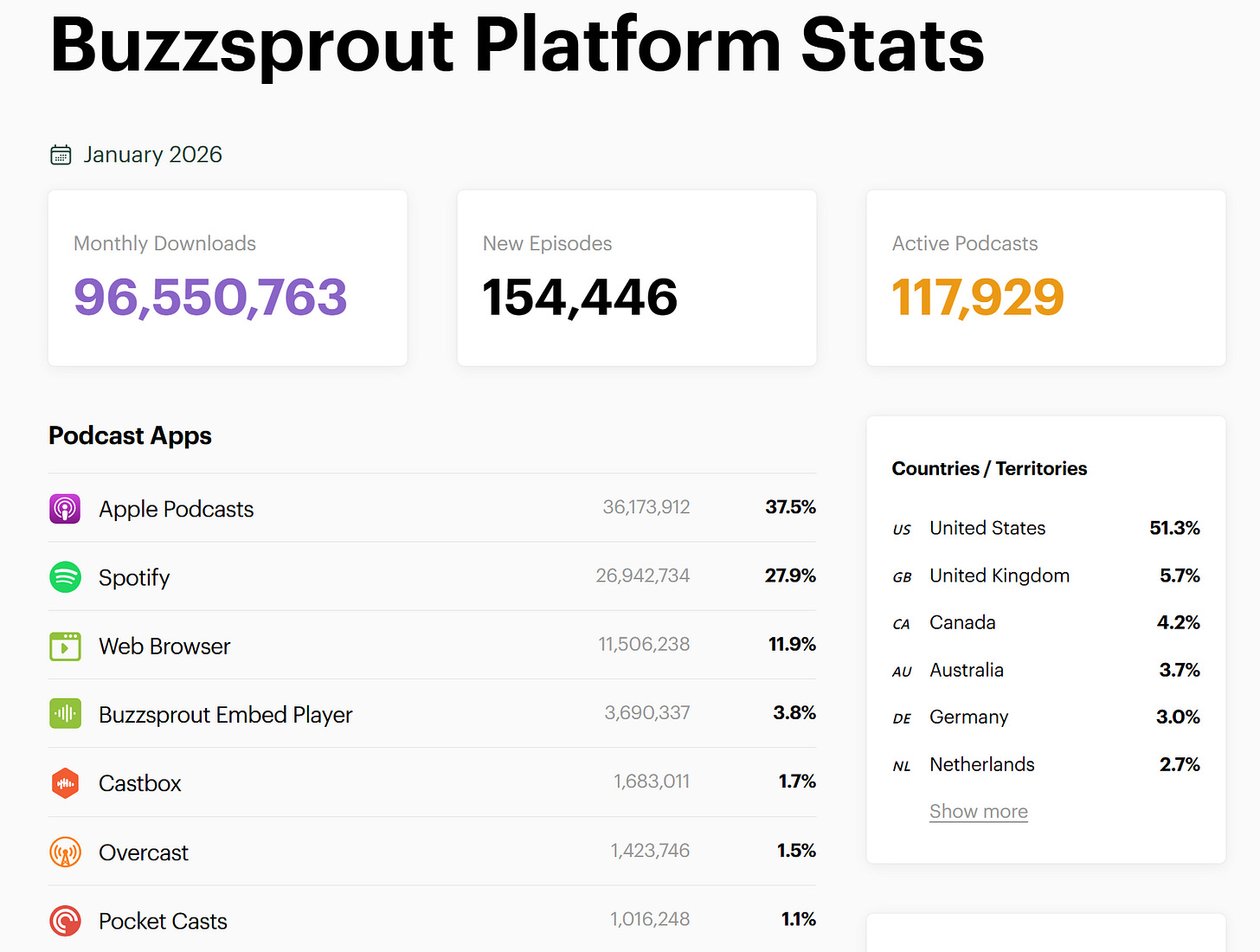
Castbox shows up as a consistently meaningful app in both datasets, ranking in Buzzsprout’s top five and appearing prominently in Transistor’s app share reporting.
And with Transistor now publishing monthly app data that Livewire is tracking over time, it is getting harder to ignore the open web as a real destination for podcast consumption.
The Numbers Google Does Not Want Shared
A MrBeast video supposedly reached 319,000 viewers on UK TV screens in a single week. How do we even know that number? It comes from BARB, which started reporting viewing for specific YouTube channels on smart TVs using panel data collected by Kantar Media. Now YouTube’s parent company, Google, has sent a cease and desist letter saying the approach breaches its terms of service, and the BARB measurement has been suspended.
As for why Google is so bothered, their stated issue is that BARB and Kantar were accessing data in a way that helped attribute viewing sessions to individual creators, and Google says third parties have to follow YouTube’s API terms and policies.
Brand News
Sony wants PlayStation characters to host your own daily, AI-made podcast.
It’s personalized to your gameplay and profile data, and it would be delivered inside the PlayStation platform rather than via RSS.
The patent even suggests the host could roast you a bit, since the show “may include a joke at the video game player’s expense.”
YouTube is Cracking Down on AI Slop
YouTube is finally cracking down on AI slop and it’s not subtle.
The platform has removed 16 of the top 100 AI-driven channels, wiping out more than 4.7 billion views as it targets low-quality, repetitive content flooding feeds.
In a 2026 vision update, Neal Mohan made the line clear: YouTube is fine with AI as a tool, but not when it turns the platform into a junkyard of synthetic noise.
When a Guest Kills the Episode
If you’ve ever had a guest go sideways, you’re not alone: Will Arnett says SmartLess once cut off a “very famous” comedian about 10 minutes in and binned the episode because the guest was such a nightmare.
He also shared that another comedian asked them not to air her episode out of fear it could hurt her career, a reminder that even the biggest shows lose recordings to guest dynamics (and sometimes plain old tech chaos).
Our Website Let's connect on LinkedIn Our YouTube channel The Stories and Strategies podcast on Apple, on Spotify And on YouTube