
YouTube Leads Discoverability
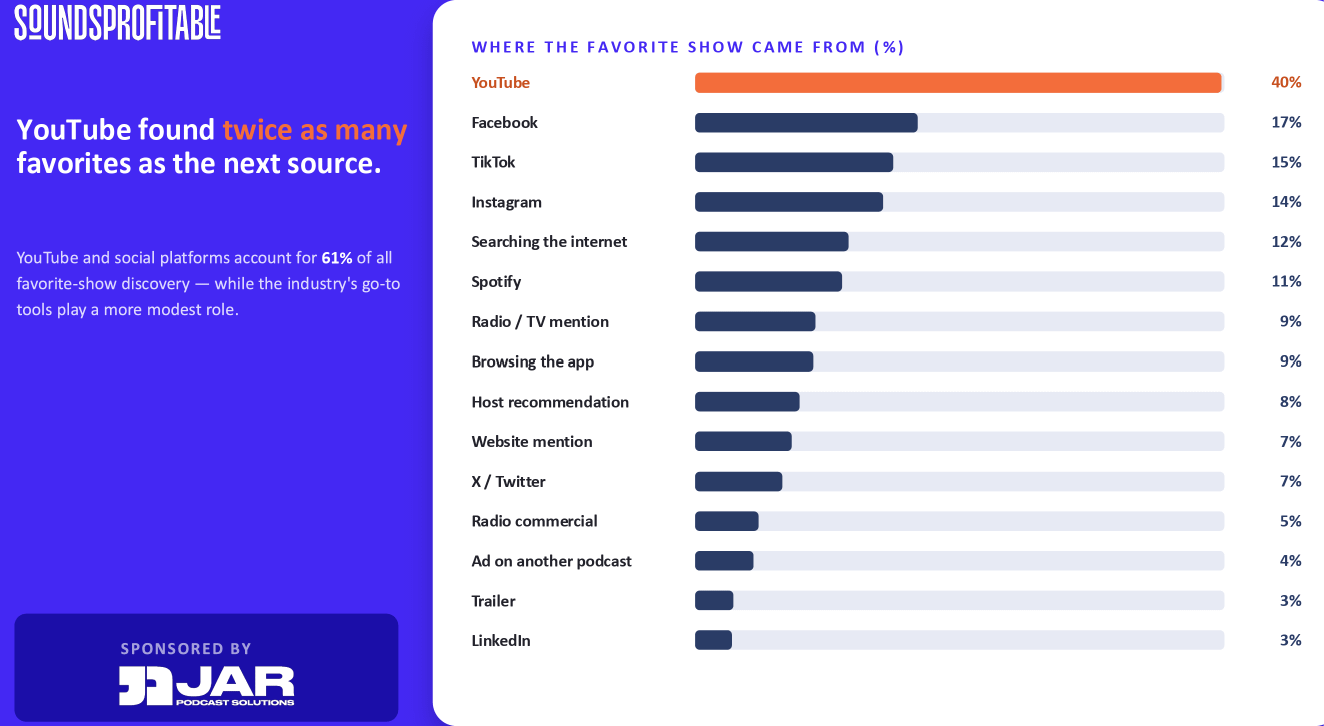
New research from Sounds Profitable and JAR Podcast Solutions asked listeners where they discovered their favorite podcast. The answer should inform how you think about growth.
40% said YouTube. That’s more than double any other single source. When you add social platforms like TikTok, Instagram, and Facebook, 61% of listeners attribute discovering their favorite show to YouTube or social media combined.
There is a nuance worth noting. Among those who found a podcast through social, 60% discovered it through organic content shared by someone they follow, versus 33% through sponsored content. Word of mouth is still doing the heavy lifting, it has just moved online.
What this means practically: the show clip your guest shares on LinkedIn, the short video you post on Instagram, the conversation that gets screenshotted and passed around, these are doing more discovery work than most podcasters realize. The podcast app is where people listen. It is increasingly not where they decide to start.
Personal recommendations remain powerful too. Nearly two thirds of podcast listeners receive recommendations from people they know, and 72% say they are likely to act on them.
The UK Wants to Regulate What You See at the Top of YouTube
The UK government is proposing that content from established news publishers and public broadcasters be made more prominent at the top of YouTube and social feeds. The proposals are currently voluntary, but legislation has not been ruled out. For independent podcasters, the detail that matters most hasn’t been decided yet: who qualifies as trustworthy, and whether that definition leaves room for anyone outside the major broadcasters.
Understanding “Search Volume” in Podcast SEO Tools
There are now several solid tools built for podcast discoverability. Ausha’s PSO Control Panel, PodSEO, and The Podcast Haven’s AI Growth Report are among the most talked-about. They track your keyword rankings inside Apple Podcasts and Spotify, surface content gaps, and suggest episode angles tied to search demand. Worth using.
But one number deserves a closer look: search volume.
Some tools display a monthly search volume figure alongside every recommended keyword, creating the impression you’re seeing how often listeners search that phrase inside Apple Podcasts or Spotify.
You’re not. Neither platform makes that data available to anyone. So unless explained differently, that number reflects web search activity, pulled from SEO data providers and presented in a podcast context. PodSEO is transparent about this, advising users to focus on relative differences rather than absolute numbers.
Ausha avoids search volume counts entirely, showing instead a 0 to 100 indicator built from ten signals inside Apple Podcasts and Spotify. One is in-app autocomplete. “For a keyword like ‘business’, we check letter by letter when it starts appearing in each platform’s autocomplete suggestions. Does it show up after typing ‘b’? ‘bu’? ‘bus’? And at what position,” says CEO Maxime Piquette.
“Since autocomplete is fed by the platforms’ own search behavior, the earlier and higher a keyword appears, the more frequently it’s actually being searched inside the app.” A genuine first-party signal, though still an inference rather than a true count.
Why this matters: someone googling a topic might just be curious. Someone searching inside a podcast app wants audio on that subject. Different intent, different vocabulary. High Google volume doesn’t reliably predict discoverability inside a podcast app.
The true data exists. Apple and Spotify are sitting on it. They just aren’t sharing.
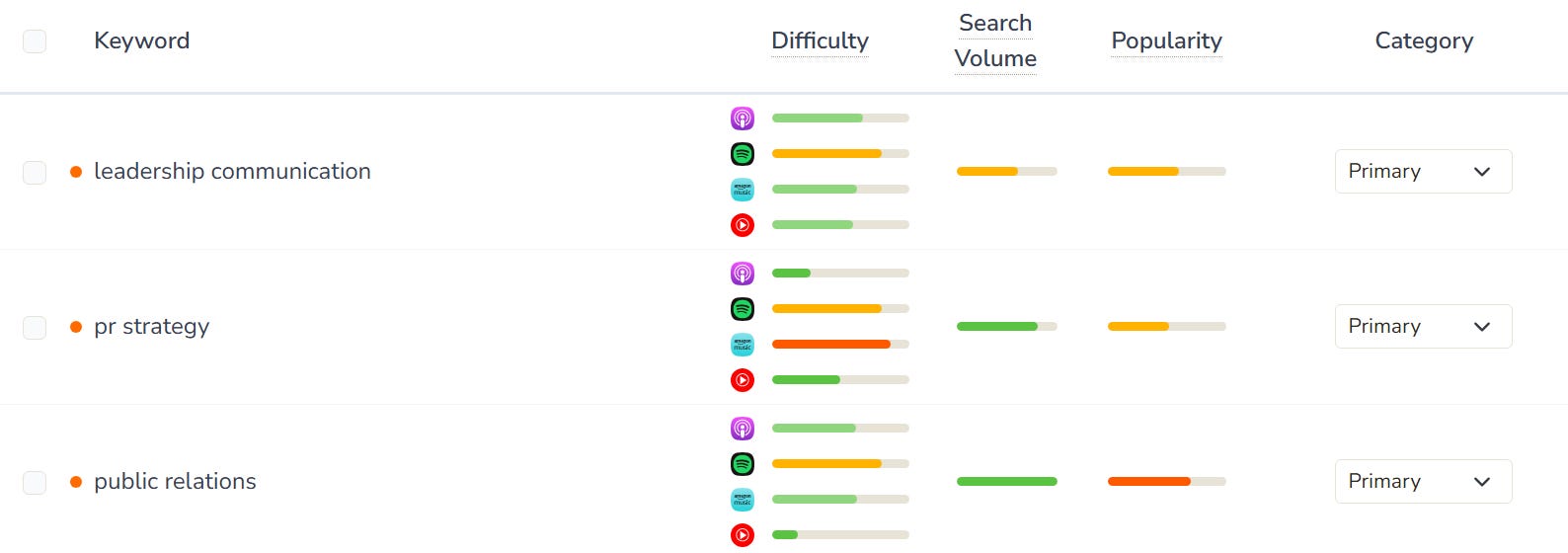
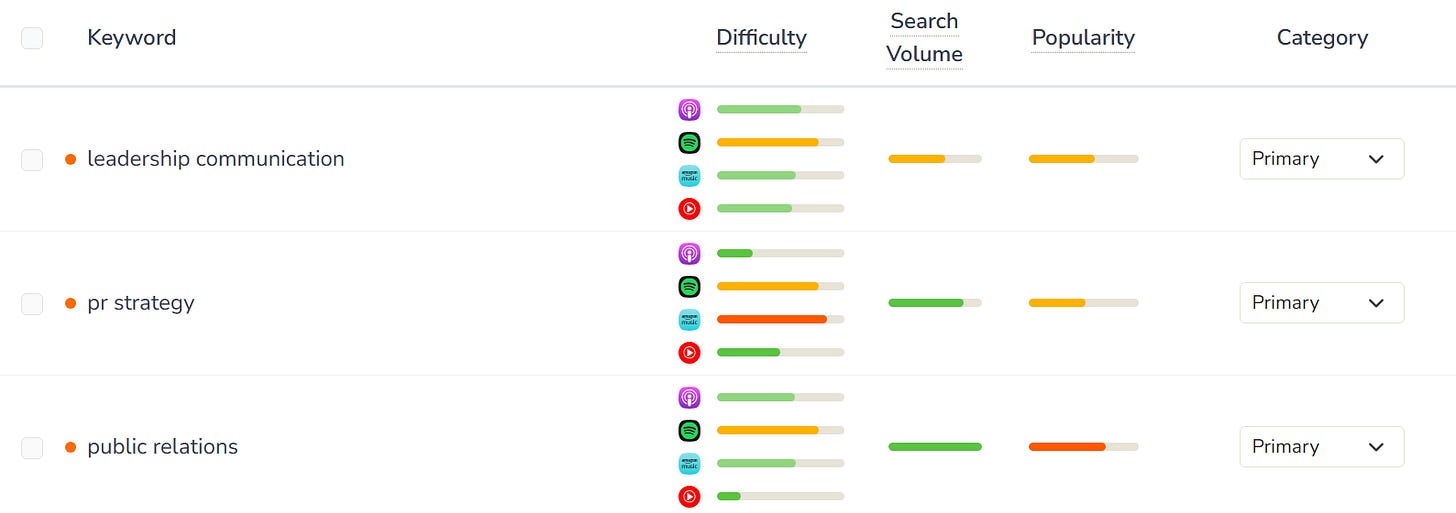
Image is a screen capture from Podseo. “Search Volume” is the column we’re talking about
Changes to the Apple Podcasts Logo?
You may notice the Apple Podcasts logo looks a little different on your phone soon. Then again, you may not. Apple’s new Liquid Glass design is changing the way app icons appear across its devices, including light, dark, tinted, and clear versions. For podcasters, the main takeaway is simple: this looks more like an app icon refresh than a full Apple Podcasts rebrand, so keep using the official badge assets for now.
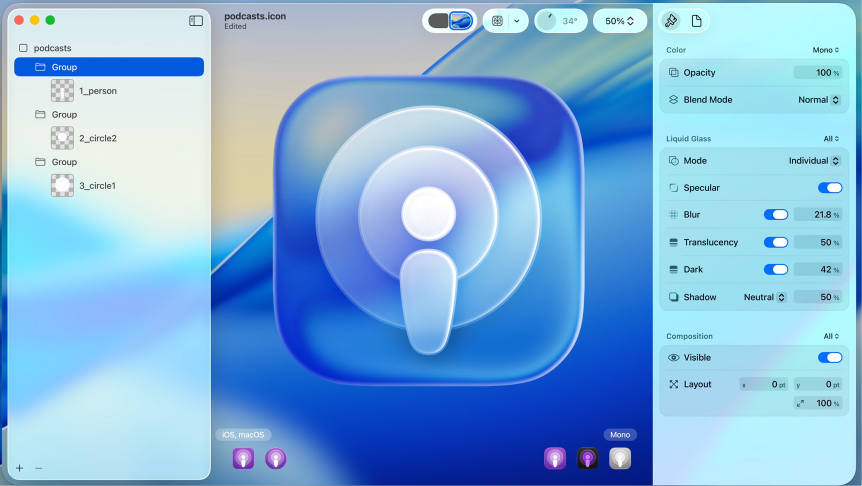
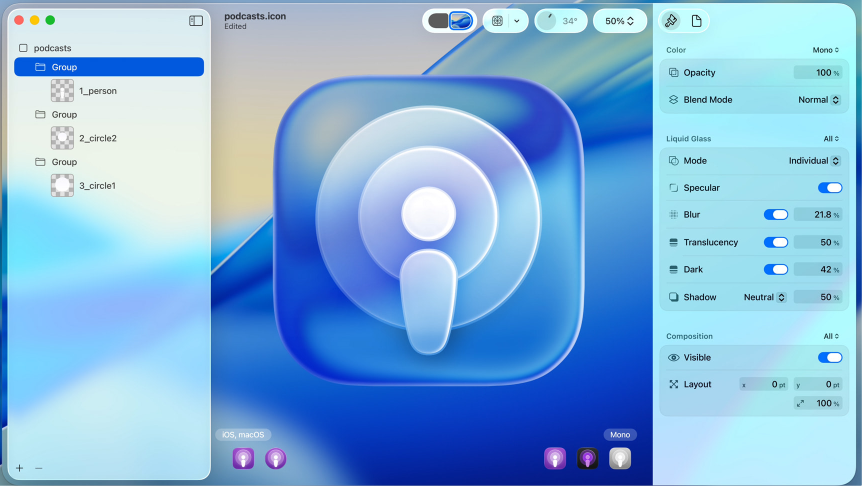
Image from Apple Newsroom
Nearly Half of Canadians Are Now Monthly Podcast Listeners
Triton Digital has released its fourth annual Canadian Podcast Report, and the headline number is the biggest yet. Monthly podcast reach in Canada climbed to 46% in 2025, up from 39% in 2024, the largest single-year increase ever recorded for the format in the country.
Among weekly listeners, the average Canadian now consumes 4.1 podcasts and 8.9 episodes per week, both up from the year before.
A few things worth noting for podcasters targeting Canadian audiences. Canadian-made content now holds its strongest lead over American podcasts in seven years, with 43% of listening share going to Canadian shows versus 41% for U.S. shows. YouTube has become the single most-used podcast platform in Canada, with 40% of monthly listeners choosing it most often, up from 29% just two years ago. And 51% of Canadian podcast consumers now both watch and listen, which the report describes as a shift to a “video-inclusive” landscape rather than a video replacement of audio.
The audience skews younger and more educated than the general population, with 18 to 34 year olds over-indexing significantly.
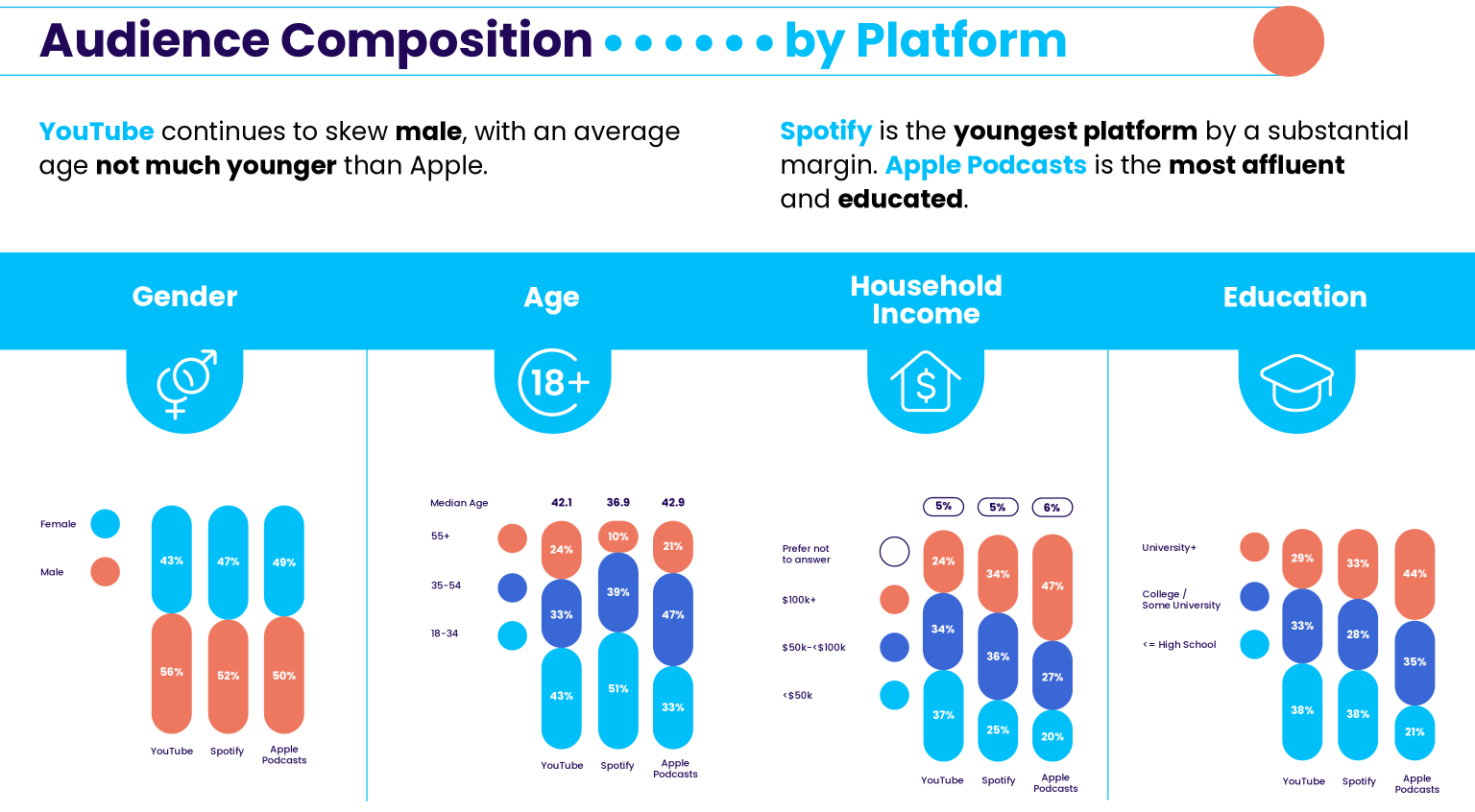
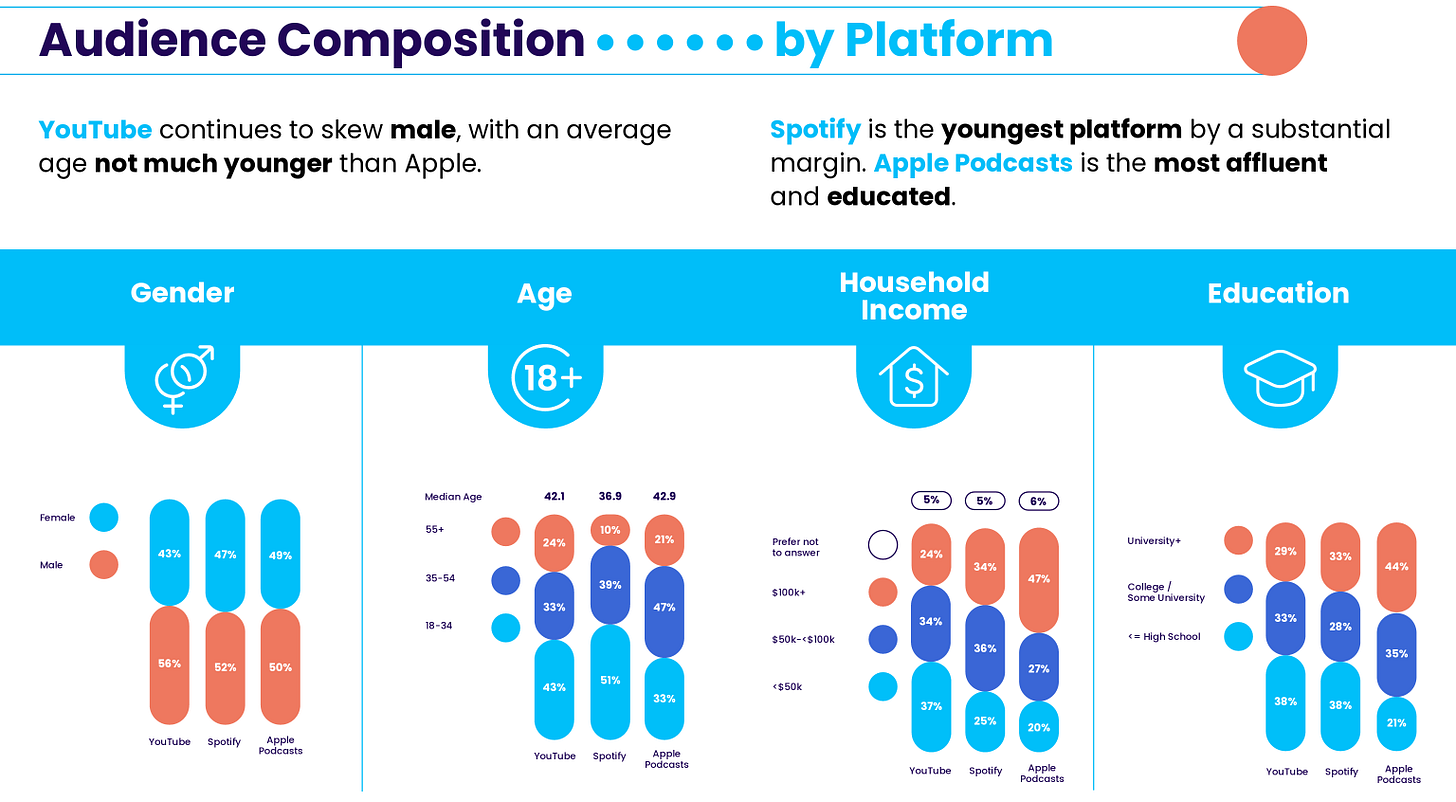
Image from Triton Digital Canadian Report
Meantime in the UK…
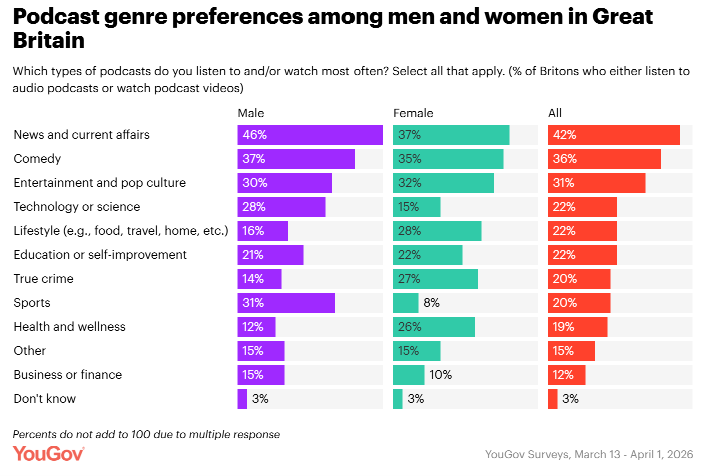
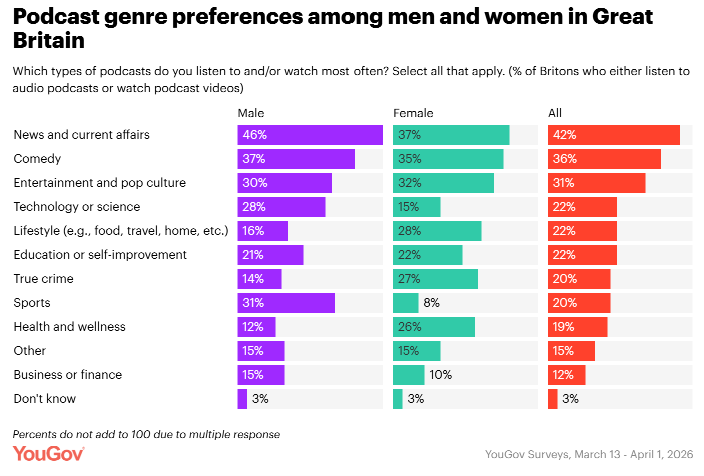
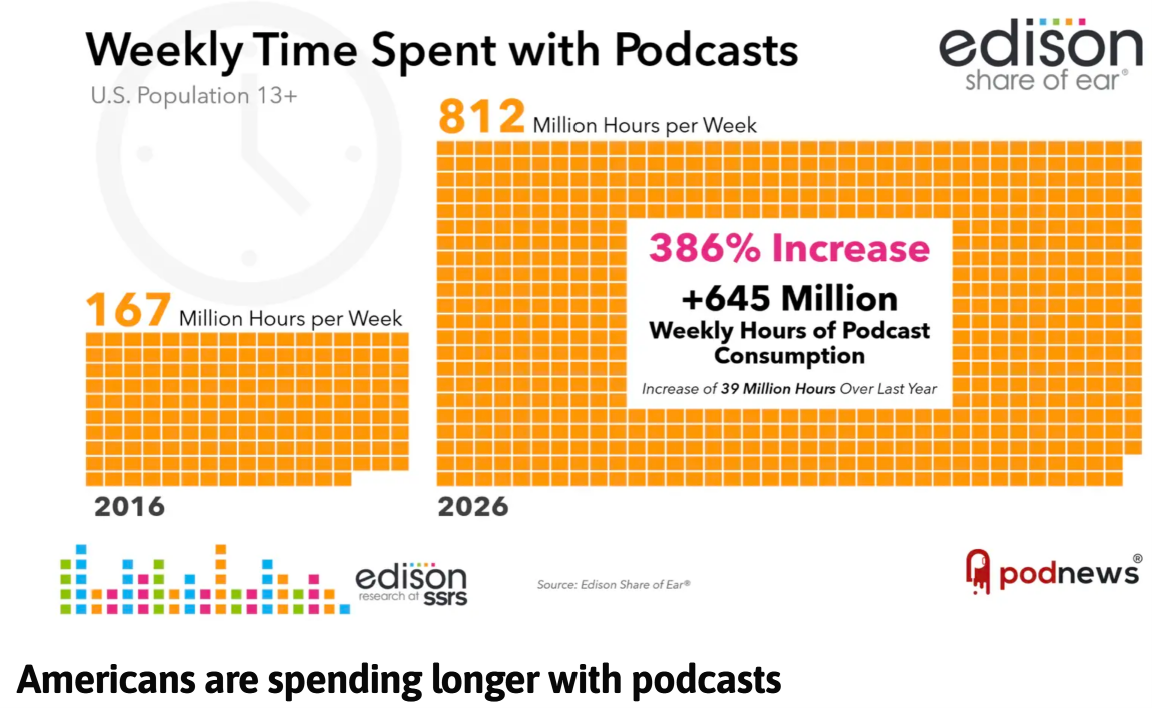
AND in the US…
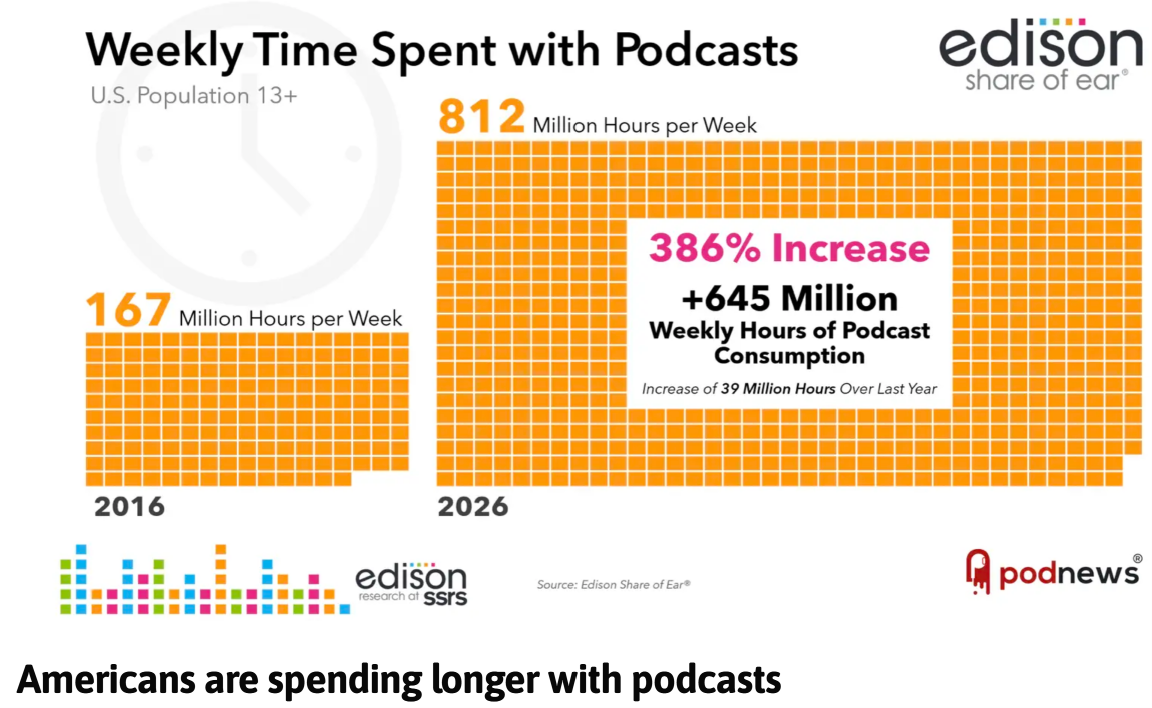
Other Stuff
Amazon was the top podcast advertiser in May according to Magellan. Amazon spent $7.7M that month with Comedy the top genre
Podcasts on Netflix is a sign society has sunk to a new low says Marc Maron in a profanity-laced swipe on Kara Swisher's show