
Vote for me to Present at Podcast Movement 26 in NYC
Hey short shameless plug off the top. There’s public voting for who should present at Podcast Movement in NYC this September. 750 entries and mine currently stands at 37th which I’m pretty excited about. Can I convince you to leave me a vote?
Stop Counting How Many. Start Understanding Who they Are
The most important shift in podcast strategy right now is moving your thinking from “how many people are listening” to “who is actually listening.” Those are very different questions, and the answers will change how you plan, pitch, and grow.
The Global Podcast Advertising Compass found that across five major markets, Millennials lead podcast consumption at 41%, but Gen X represents 24% of listeners and seniors significantly over-index in the US. More importantly, the report identifies 65 and older listeners as the most under-targeted demographic in podcast advertising despite strong signals around travel, retail, wellness, and seasonal shopping. These are not passive audiences. They are active, intent-rich, and often tied to high-value consumer moments.
For podcasters with older audiences who struggle to sell sponsorships, the gap may not be your audience. It may be an advertiser assumption that has not caught up with the data.
The gender finding is also worth noting. The cross-market baseline is 52% female and 48% male, broadly balanced. The old assumption that podcasting skews heavily male is no longer a reliable blanket rule, and it varies significantly by market. France and the UK have notably higher female shares. True Crime skews female. News and Sports skew male. Comedy and Society and Culture provide the broadest reach.
The practical takeaway the report keeps returning to: stop benchmarking podcast audiences against the general population. Benchmark them against the podcast population. Whether a show over-indexes for any group only means something when you compare it to what podcasting normally looks like, not to the world at large.
Your Widest Audience Has Never Heard Your Podcast
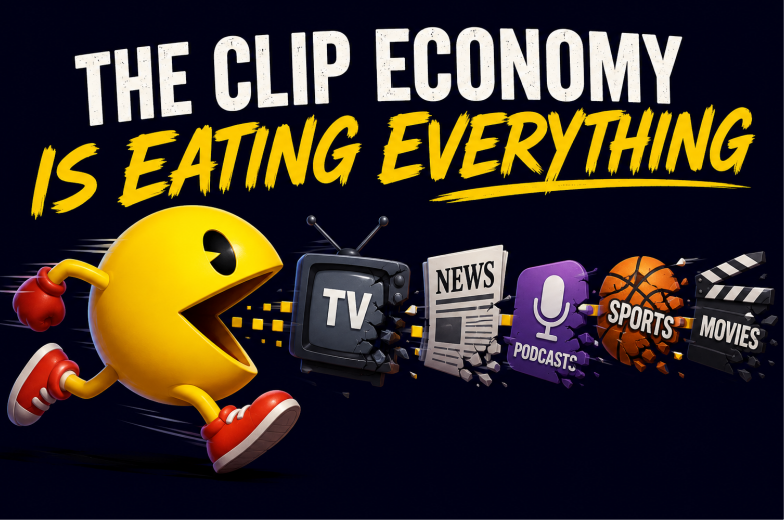
Steven Goldstein at Amplifi Media has been watching what clips are doing to podcasting, and one observation from his NYU students stopped me cold. Many of them watch three or four clips from a show, assume those are the best moments, and feel no need to listen to the full episode. The clip was not the gateway to the show. The clip was the show.
I think about this personally. I’ve never listened to a full episode of Joe Rogan. But I see his clips constantly, I feel broadly informed about what he covers, and I would not describe myself as someone who avoids his podcast. I just never actually listen to it.
Goldstein’s argument is not that clips are killing long form. He’s saying clips and long form are increasingly two separate products serving two overlapping audiences. Some people move between them. Many do not.
Clips give you width. Audio gives you depth. Width is reach, impressions, discovery, the top of the funnel. Depth is where trust actually builds. It’ s where someone spends 45 minutes alone with your voice and comes out the other side feeling like they know you. That relationship is what makes podcast advertising work, what drives word of mouth, and what keeps listeners coming back. You cannot build that from a clip.
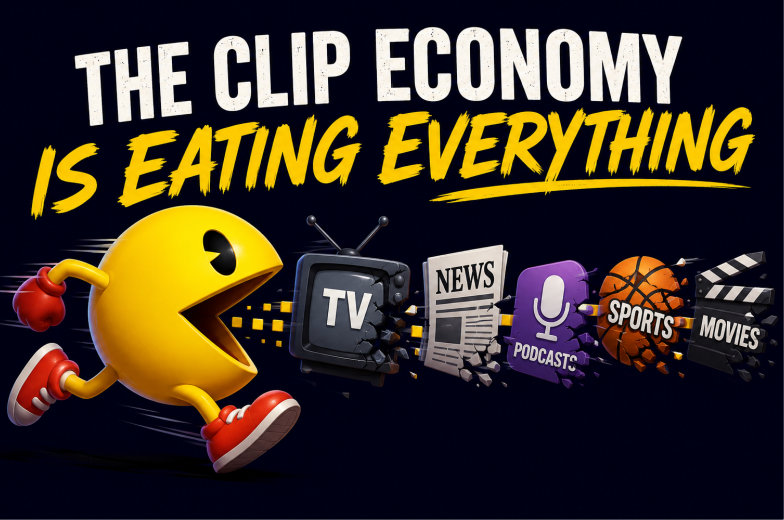
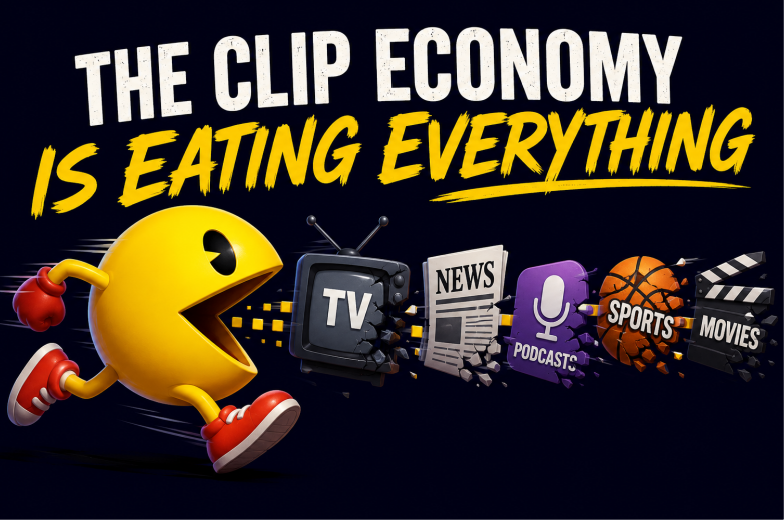
Image is from Amplifi Media
When Your Doctor Has to Compete With Your Podcast
Half of American adults under 50 now get health information from podcasters and online influencers. That statistic is reshaping what happens inside the exam room. Jamie Ducharme’s piece in the New York Times traces the new three-way dynamic between doctors, patients, and the podcast episodes patients arrive clutching. Some physicians are adapting, even prescribing vetted episodes instead of printed handouts. Others are pushing back on influencer-driven demands for unnecessary tests and unproven treatments. One oncologist describes watching a patient die after podcasts convinced her that ivermectin and a sugar-free diet would cure her rectal cancer.
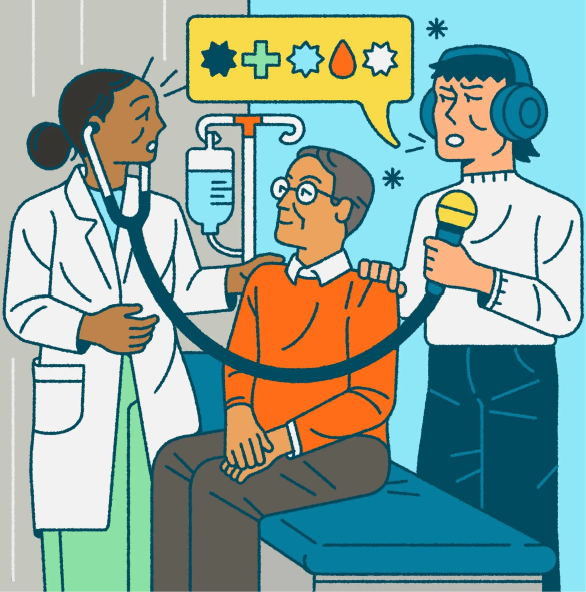
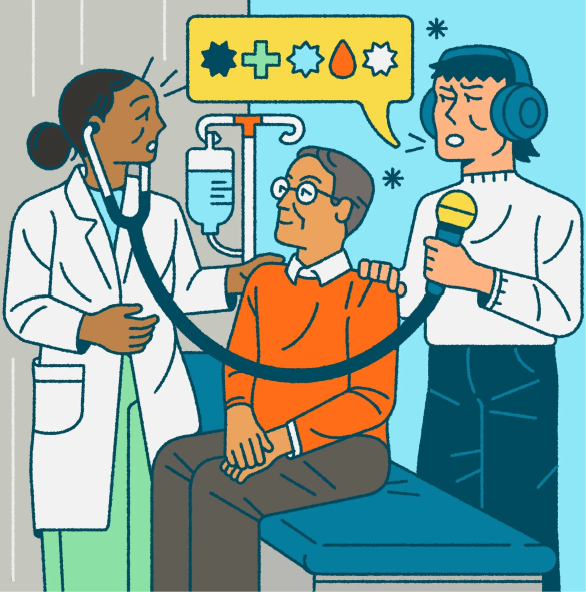
Image by Zach Hackman in the New York Times
Podcasts Are Reaching Men Where Therapy Can’t
Men are more likely to die by suicide than women. They’re less likely to ask for help.
A study out of York St John University interviewed nine male listeners of a men’s mental health podcast. Men who reflected on what they heard were able to start seeking help and push back against the stigma they’d internalized.
A guy who won’t call a therapist will put in earbuds.
That’s not a small finding. Podcasting’s intimacy, one voice, no audience, usually consumed alone, creates conditions a billboard or a brochure never can.
If you make a podcast, you may be doing more good than your download numbers suggest.
Apple’s Video Numbers Look Good… But Read the Fine Print
Bloomberg’s Ashley Carman is reporting Apple Podcasts’ video push is showing early promise, with shows that opted in seeing higher consumption numbers. Sounds encouraging. But several details buried in the coverage reframe the headline considerably.
Those higher numbers are attributed to, in part, Apple’s own promotional activity inside the app in favor of shows using HLS video. In other words, Apple is rewarding the behavior it wants to encourage. That’s not the same as video itself driving more listening. The question worth asking is whether Apple Podcasts video is actually moving listeners independently of that promotion. That answer remains genuinely unknown.
Second, only 10 shows in the top 200 US podcast chart currently offer video through Apple’s HLS toggle. After months of Apple pushing the format, 95% of the most successful podcasters in the country have passed for now.
There are practical reasons for that hesitation. Switching to HLS requires an Apple Podcasts Connect API key and a participating hosting provider, which is a meaningful move toward platform-controlled syndication rather than the open RSS distribution most podcasters rely on. Some hosting platforms charge an additional monthly fee plus bandwidth costs based on video plays. And while switching back to audio-only is possible, it adds workflow complexity most independent podcasters did not sign up for.
But does it mean promotion from Apple isn’t it worth it for my podcast? It depends on whether Apple is also promoting the medium and smaller shows… and not just the great big ones. We’re currently working with several clients who have made the switch to HLS distribution and are monitoring whether it results in measurably better consumption. It’s too early to report anything definitive, but we will share what we find.
Other Stuff
Edison Research is presenting The UK Podcast Consumer 2026 in a free webinar tomorrow (July 16) at 2pm BT / 9am ET, covering YouTube's rise as the UK's top podcast platform, listener attitudes toward AI, and the advertiser case for podcasting. Register here.
Cool Tool: Podtrac just launched a free promo trading feature that lets any Podtrac-measured podcast request cross-promotion with other shows, covering dynamically inserted promos, baked-in spots, feed drops, and smart links in episode descriptions.
Cool Tool: A simple site called loudness.app will tell you, in seconds, whether your show sounds broadcast ready or amateur. Upload an episode and it measures three numbers that matter more than most podcasters realize. LUFS tells you the overall loudness of your episode (target is -16). TP max shows the loudest peak in your file (never above -1). LRA measures how consistent your volume is between speakers, so a guest who talks quietly and a host who talks loud don’t force listeners to keep reaching for the volume knob (aim for an LRA around 2.5).