
Disney Is Using Podcasts to Keep You From Leaving
Nobody needs a podcast to find out Star Wars exists.
Disney+ and Hulu are doubling their video podcast library, and at Theme Park Scope reports that Disney calls the Mandalorian and Grogu companion show its biggest podcast launch ever, based on first week global views. Nobody lands on that show as a stranger. They’ve watched the series and want more time inside that world. Disney isn’t using podcasts for discovery. It’s using them to expand the experience and keep you in the building after the credits roll.
Disney also says 90% of viewers who watched the Tell Me Lies companion podcast streamed every episode of Season 3. I’d treat that carefully. It’s Disney’s number, relayed by a fan site, and it almost certainly describes superfans. People who seek out a companion show were already the likeliest to binge, so it shows overlap, not cause.
If you make or commission branded podcasts, here’s the takeaway. Most pitches promise lead generation. Disney’s model points to trust acceleration: hours of a familiar voice in front of people who already know you. Measure completion and return listening, not just reach.
Discovery gets someone through the door once. Disney’s asking what happens in the hour after.
Podcasting’s Biggest Study Can’t Tell You Where YOUR Audience Is
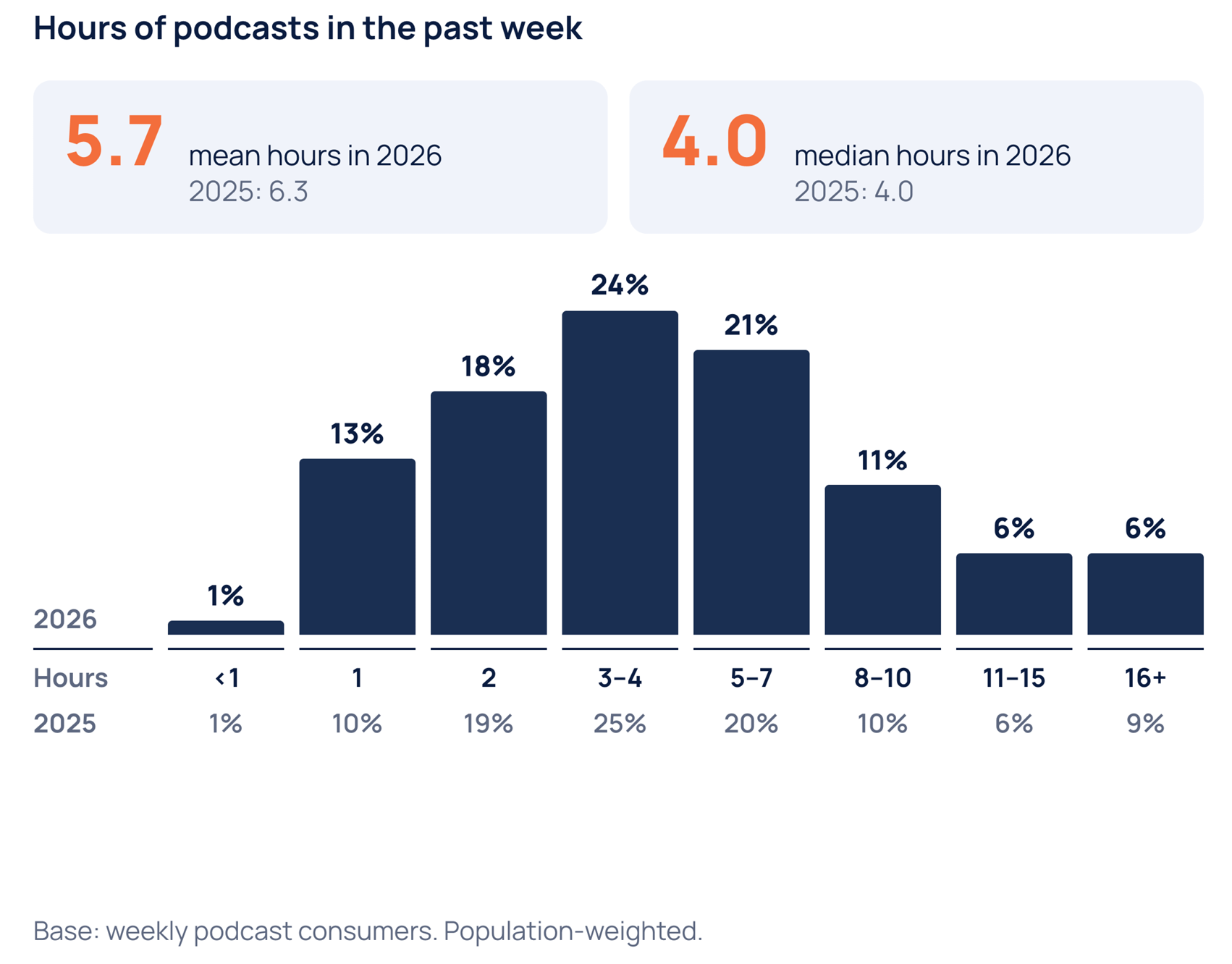
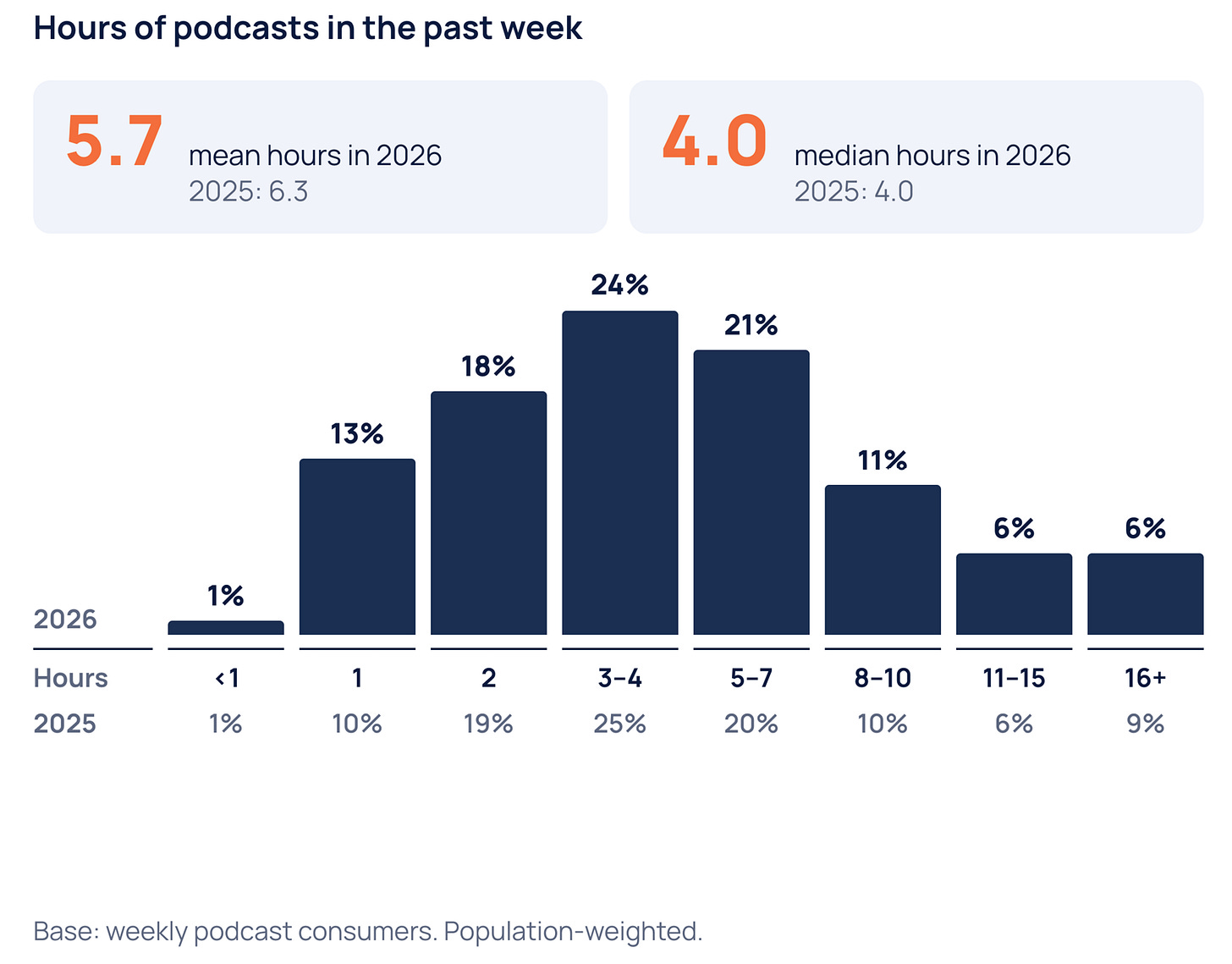
Sounds Profitable released The Podcast Landscape 2026 last week, and it did its job. Reach is steady, with 39% consuming podcasts weekly. Netflix shows up third among the platforms people named. Video keeps growing. If you read one study about podcasting this year, read this one.
Then read it the way a brand should. I run a podcast agency, so you decide if I’m being salesy or helpful and check it against your own data.
A study about the average person can’t tell your show what to do. Someone has to sort what applies to you from what doesn’t. What applies is that the typical consumer regularly follows only two or three shows. Your podcast isn’t chasing a slice of a giant audience. It’s competing for one of a few slots. And most people stick with one platform for their favorites, so being where your audience already is beats being everywhere.
What doesn’t apply is Netflix. Only 5% call it their most used platform and it carries a grand total of about 70 podcasts. That’s not a distribution plan for you.
The Landscape study also says Apple Podcasts is losing ground. The share of consumers calling it their most used platform fell from 11% to 8%. Before you rethink your distribution, know that the report itself notes this year’s answer list added Netflix, Tubi, Apple TV and HBO Max, which takes a little share from every other option. Some of that dip is the survey, not the audience.
And for your show, what Apple did nationally matters far less than what it does in your show’s performance. Your own dashboard answers the question no national study can. I’ll bet you a coffee Apple is your #1 listening app. Probably just over 50%.
For our clients, on average, the feed audience splits roughly 55% Apple, 40% Spotify and 5% everything else. We track YouTube separately, because most of our clients are brands and put the show on an existing channel as a playlist. That’s one client mix, not a law. But it’s the kind of answer the Landscape was never built to give.
Read the Landscape to see which doors exist. Read your own numbers to see which ones your audience walks through. And (sales hat on but tipped to one side) talking with someone who knows the landscape specifically for branded podcasts is extremely helpful.
What Happens to Podcasts When EVERYONE Has an AI Agent?
Noah Shinn, founder and CEO of Instinct, paints a fascinating picture in a recent episode of Invest Like the Best. His agent is not another app you have to learn. You text it, call it or email it, and it acts on your behalf. It can notice you’re running late and arrange the ride, coordinate calendars directly with someone else’s agent, book the flight and hotel for a trip, cancel subscriptions you no longer use, make restaurant reservations, order dinner for when you get home or even organize an evening out with friends. Shinn believes this could eventually change how most of us interact with software altogether.
That sounds wonderful in one sense. If agents handle more of the administrative noise in our lives, we may get some time back. Less searching. Less clicking. Less comparing schedules. Less figuring out logistics. More room for the things we actually choose to spend time on. Podcasts could benefit from that. They’re not usually about completing a task as efficiently as possible. We listen because we want to spend time with an idea, a story or a person.
But there is a yin and yang here.
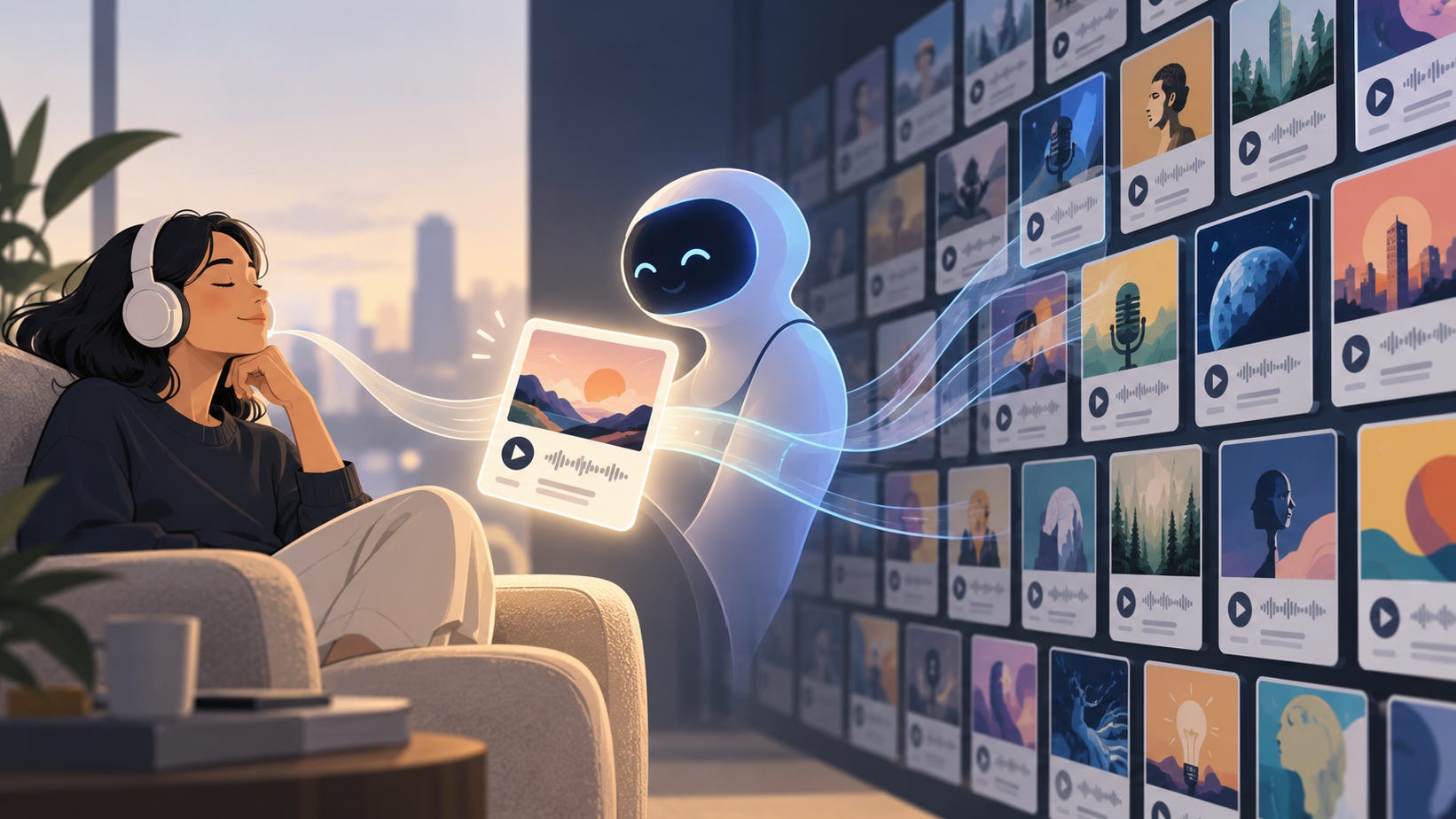
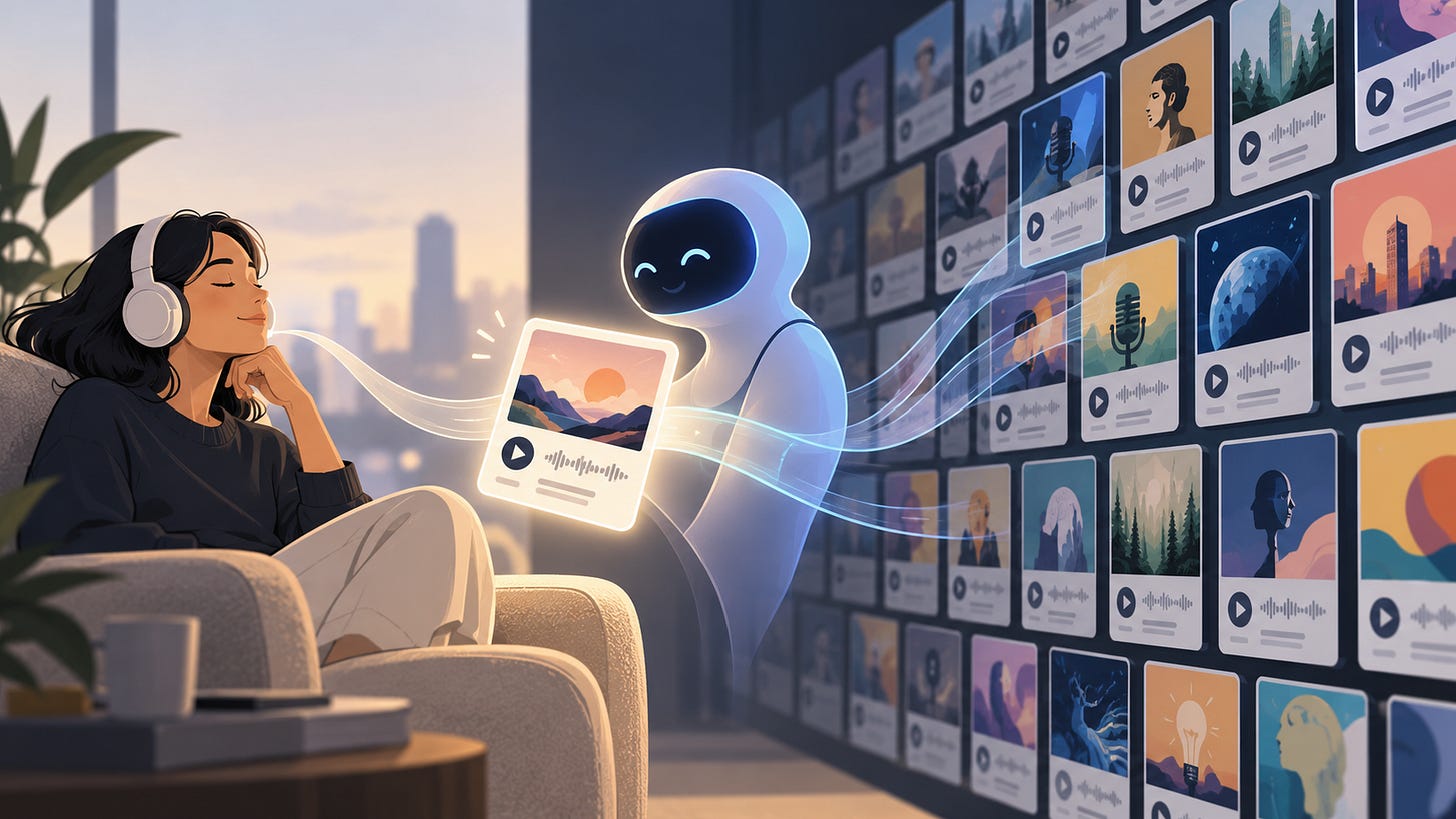
If AI agents start deciding what flight we book, what restaurant we choose and what products we buy, why wouldn’t they also help decide what we listen to? Instead of opening a podcast app and browsing, I might simply say, “Find me something interesting about AI and communications for my drive home.” The agent could choose the show, the episode and perhaps even the section it thinks matters most. That gives podcasters a new challenge: AI may give audiences more time to listen while simultaneously becoming a new gatekeeper to discovery. In that world, creating something humans genuinely value still matters enormously, but making sure an AI agent understands what your show is, who it’s for and why it is worth recommending may matter too.
Your Host’s Voice Is a Brand Asset. Faking It Could Cost You
Deceived. Upset. Skeptical. Betrayed.
Those are the words weekly podcast consumers picked most when Edison Research at SSRS asked how they’d feel if their favorite host started using an AI-generated version of themselves. 66% reacted negatively. The top positive reaction, impressed, got just 14%.
Those are words about being lied to, not words about technology. On a branded show the host often is the company’s voice, so an undisclosed AI clone puts the brand’s credibility on the line, not just the show’s.
Our Website Let's connect on LinkedIn Our YouTube channel The Stories and Strategies podcast on Apple, on Spotify And on YouTube