

The Habit Gap
Podcast audiences are getting bigger, but podcast habits are not. Crowd React’s new State of Media 2026 report finds that listening frequency has declined for three straight years, even as overall reach climbs, a pattern the report calls “habit softening.”
Podcast reach rebounded to 57% this year after dipping to 50% in 2025, but conversion (listening three to five days a week) fell from 37% in 2024 to just 28% in 2026
That gives podcasting the lowest conversion rate of any media category in the study, a steeper drop than radio, news, or cable television
The report points to a growing anti algorithm sentiment, arguing the opportunity is not chasing the algorithm but “being the thing people choose when they are tired of being chosen for.”
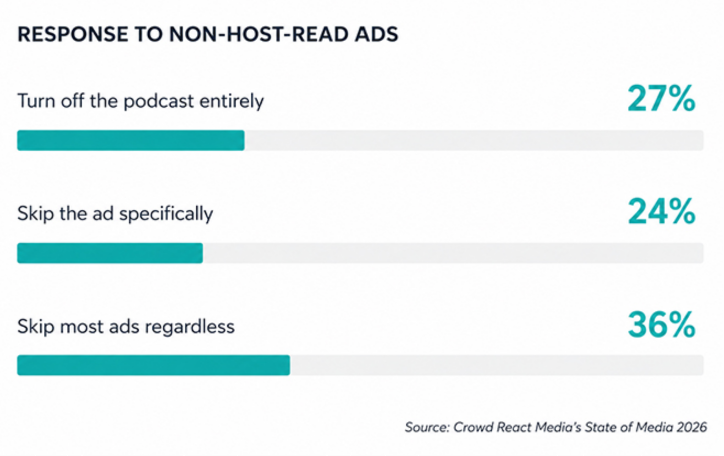
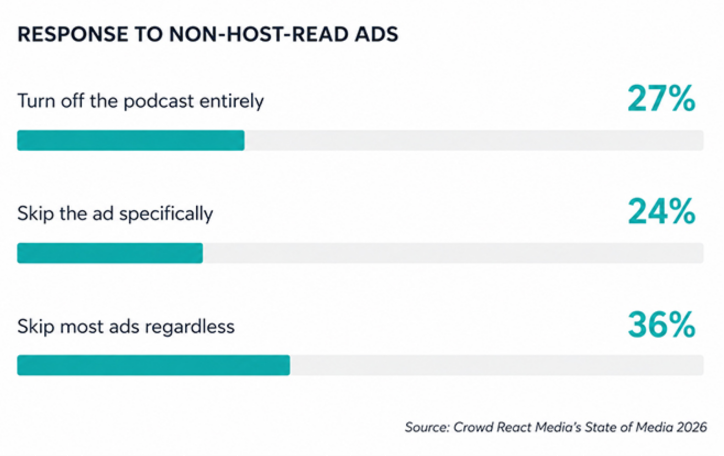
Trust may be the fix. 51% of listeners say they take negative action when ads are not host-read, with 27% turning off the episode entirely, a sign that host credibility, not platform reach, is what builds the habit
Authenticity Wins When it Comes to Podcast Trailers
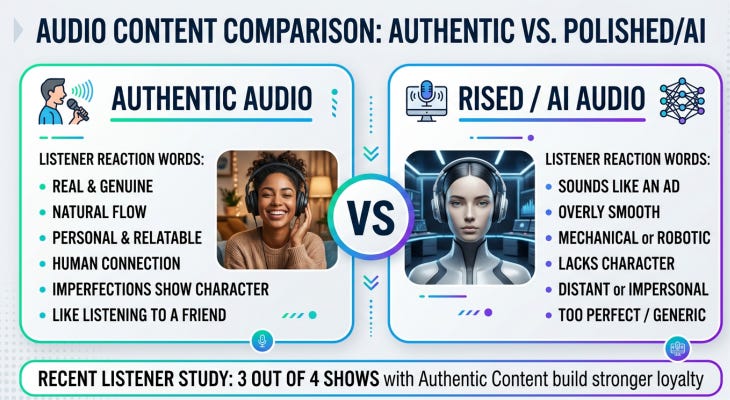
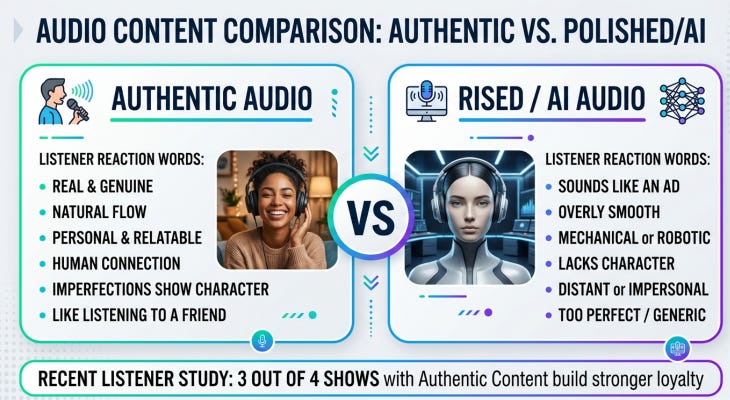
Coleman Insights ran a study with 500 podcast listeners testing four different shows and eight trailer variations. The through line across nearly every test: authenticity wins.
Three out of four shows saw the more authentic, natural trailer beat the polished or clip-heavy version on both preference and listening intent. Listeners in the comments used words like real, natural, and personal without being prompted. When a trailer sounded like an ad, they said so, and not kindly.
The finding that stopped the researchers cold: listeners identified AI-generated voice in a trailer without being told which version used AI. They just knew.
One practical exception. For a high-energy sports and culture show, the AI-produced trailer drove higher listening intent despite losing on preference. Context matters. Match the energy of your trailer to the energy of your show.
If you do not have a trailer, make one today. If you have one, go listen to it and ask yourself honestly: does it sound like a conversation or a commercial?
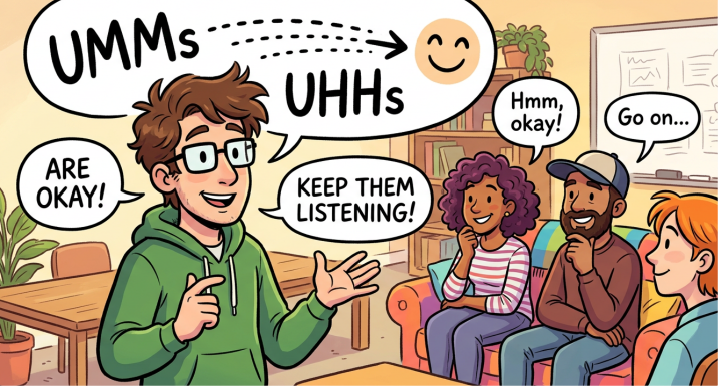
The Case AGAINST Editing Out Every Umm and Uhh
Here’s another example where authenticity wins.
A source in the podcast industry recently shared a 2019 study as something close to settled science: verbal fillers damage credibility, and podcasters who leave them in are doing their guests no favors.
It’s a tidy conclusion. It’s just not the whole story and not the right conclusion. It’s complicated.
The same body of research in that 2019 study contains findings that cut the other way. A University of Illinois study found that listeners actually remember content better when a speaker uses “uh” and “um” than when speech is perfectly fluent. Fillers appear to function as attention cues, signaling that something worth tracking is coming. Separate research on English and Dutch speakers found that hearing “uh” measurably improves a listener’s ability to recognize the words that follow. And a University of Rochester study found that toddlers as young as two and a half had already learned to interpret fillers as meaningful signals, looking toward a new object 70 percent of the time when a speaker stumbled before naming it.
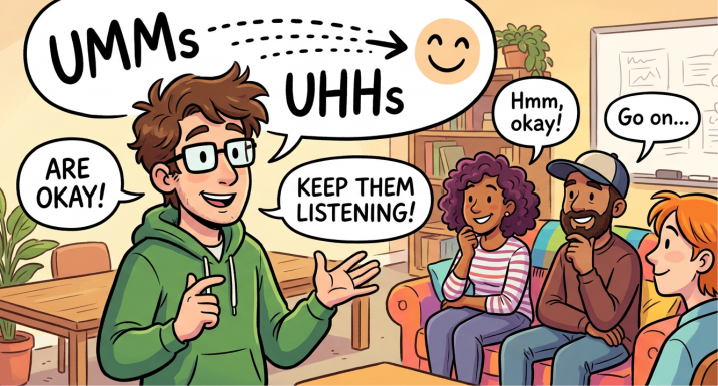
The takeaway for podcasters isn’t “leave everything in.” It’s that the blanket rule has no scientific basis. Edit for clarity. Edit for pace. But the umm is not automatically the enemy. We explored this in depth in an earlier episode of our podcast if you want to go deeper.
The Audio vs. Video Debate Is the Wrong Question
New research from Sounds Profitable, unveiled at VidCon last week, reframes the conversation the podcasting industry has been having for the past two years.
The Podcast Atlas surveyed more than 5,000 U.S. consumers and found that audiences do not think in terms of platforms or formats. They follow creators. And when they find a creator they trust, 73% say they would follow that creator from audio to video, and 71% would follow them from long form to short form clips.
A few numbers worth noting. 84% of people who consume podcast clips say those clips lead them to become regular listeners. 87% of newsletter subscribers say podcast newsletters bring them back to episodes. And audio remains the most trusted format across all touchpoints, even as video audiences are more likely to search for brands and make purchases after hearing an ad.
The conclusion… audio builds the deepest trust. Video drives both discovery and action, with video audiences more likely to search for brands, use promo codes, and make purchases after seeing an ad. Clips introduce creators to people who have never heard of them. Newsletters bring existing listeners back. These are not competing formats. They are different jobs in the same ecosystem, and creators who understand that have a significant advantage over those still debating which format to choose.
Tom Webster from Sounds Profitable is presenting the full findings in a free webinar later today at 2pm ET. Register here.
Other Stuff
Stampede Social just launched RSS-powered Instagram automation for podcasters: fans who comment a keyword on your posts automatically get a DM with your latest episode, or any specific episode from your back catalog
YouTube is now nearly twice as big as Netflix on American TV screens, accounting for 13.4% of all U.S. TV viewing in April compared with Netflix’s 7.8%, according to Nielsen’s latest Gauge reports.
MSNow is doubling down on podcast content