
My Take on the USC Annenberg Study
When I read this new USC Annenberg report, the numbers hit me hard… personally. I have spent a career around audio and voices, and I feel a responsibility to acknowledge what this data shows. Podcasting is supposed to be the most open and accessible medium. Anyone with a mic can join the conversation. And that’s true.
Yet the reality is that most of the big shows still look and sound like… well… white men… predominantly. That matters because our industry is built on trust and connection. Listeners learn who “counts” by whom they hear. If only voices with similar life experiences are taking the mic, we cannot pretend this medium is truly open.
This is personal for me because I work closely with creators every day. I have seen the talent that never gets a fair shot. I’ve had conversations with women and creators of color who are doing everything right and still hit walls that should not be there. I’ve also had to check my own assumptions about who I invite on my podcast, who I elevate, and who I give time to. The report reminds me that this is not a small gap. It is a structural imbalance that continues because people like me do not push back hard enough.
The Study
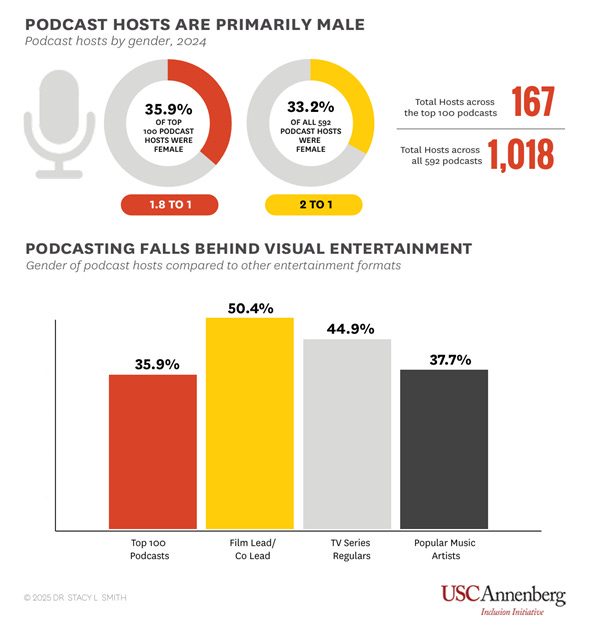
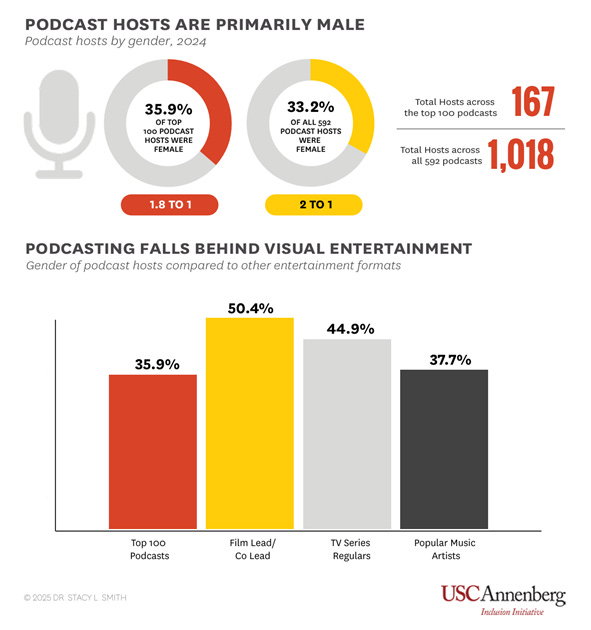
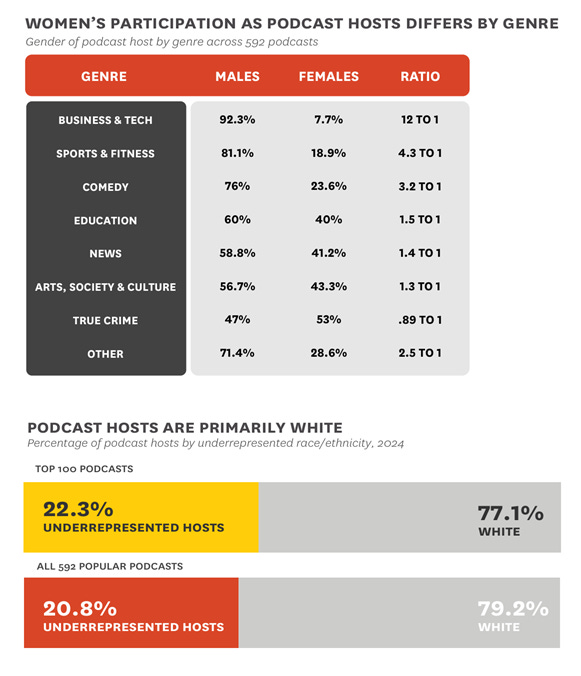
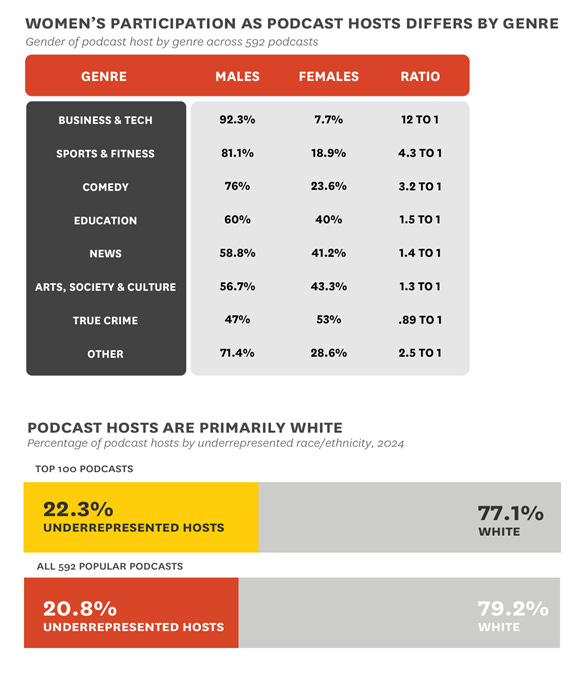
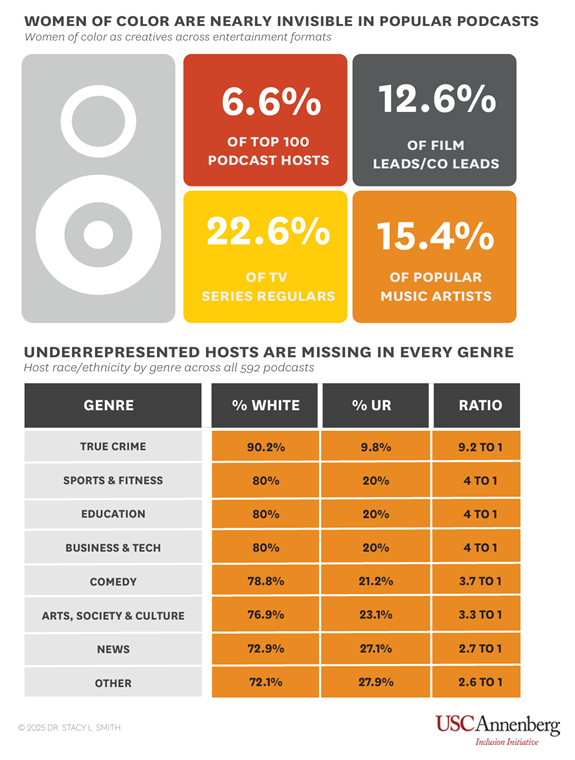
The USC Annenberg study confirms what many have suspected but never had measured at this scale. Across 604 popular shows, men dominate host positions, making up roughly 64% in the top 100 and about two thirds across the full sample. Women reach parity in only one genre, True Crime, and even there the content often revolves around violence against women. Racial representation is just as uneven. More than 77% of top hosts are white, despite 41 percent of Americans identifying with a nonwhite racial or ethnic group. The intersection of gender and race reveals the most severe gap. Fewer than 7% of top hosts are women of color, making podcasting the least inclusive of all major entertainment formats the study compared.
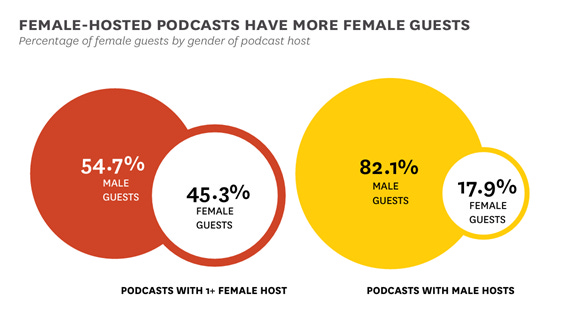
Guest patterns mirror the hosting imbalance. More than 72% of all guests are men. Nearly two thirds of episodes across the top 100 shows did not include a single female guest. Genres tied to influence, such as business and technology or sports, were among the worst offenders.
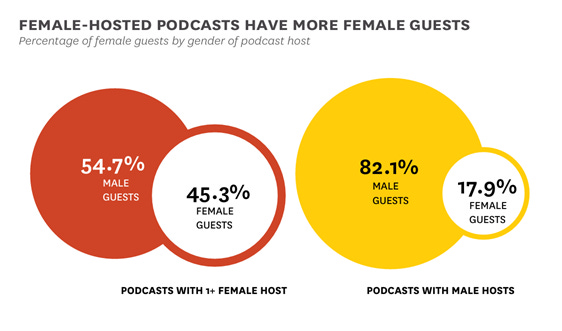
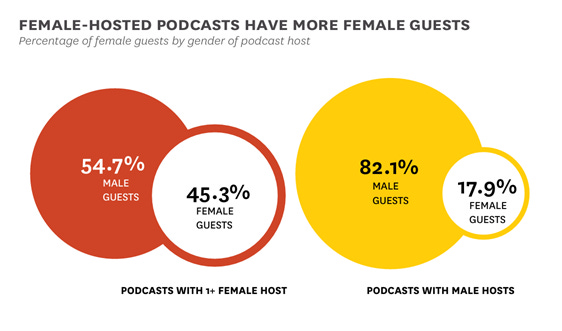
One clear lever for change stands out. When a podcast has at least one female host, nearly half of its guests are women. When a podcast has only male hosts, fewer than one in five guests are women. Representation creates more representation. This report makes one thing impossible to ignore. Podcasting will not fix itself. The people who run shows, build platforms, book guests, and make decisions about what gets promoted must deliberately widen the circle.
Podcast Stat of the Week
The Podcast Academy and Lower Street recently teamed up to produce a terrific new study looking at how video does or doesn’t help your audio podcast. At first glance it LOOKS like video actually boosts audio. A gimmie. You gotta do video to help your audio. But the devil is always in the details. It’s just not that simple. Jeremy Enns (Podcast Academy) and I sat down recently to go through the numbers.