
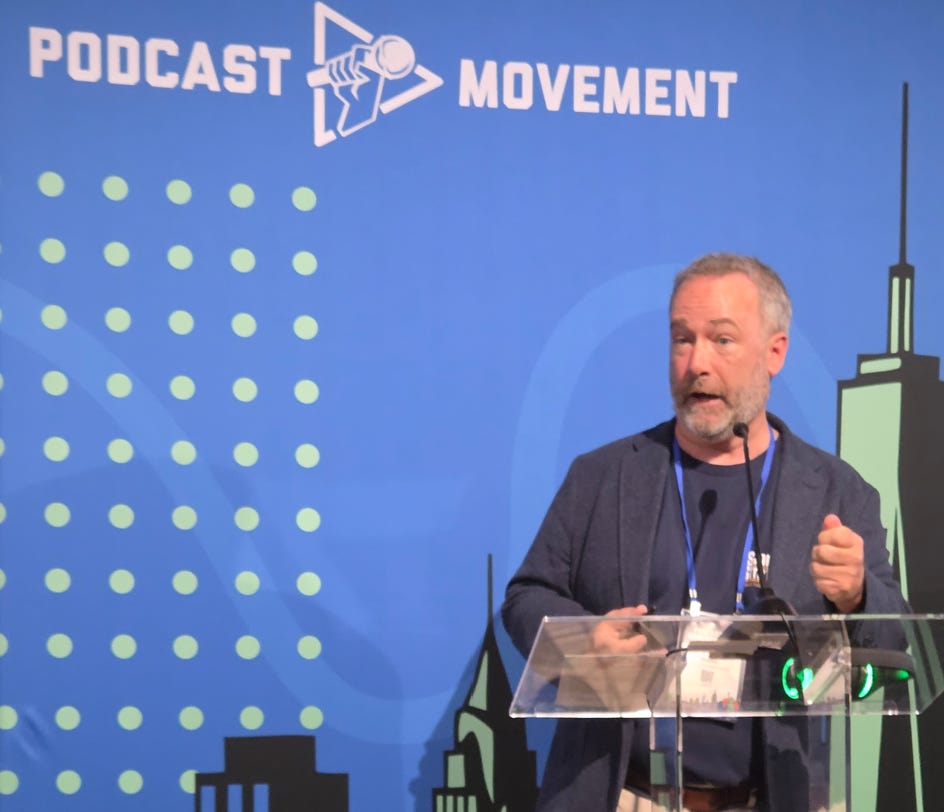
Notes from Podcast Movement 26 in New York
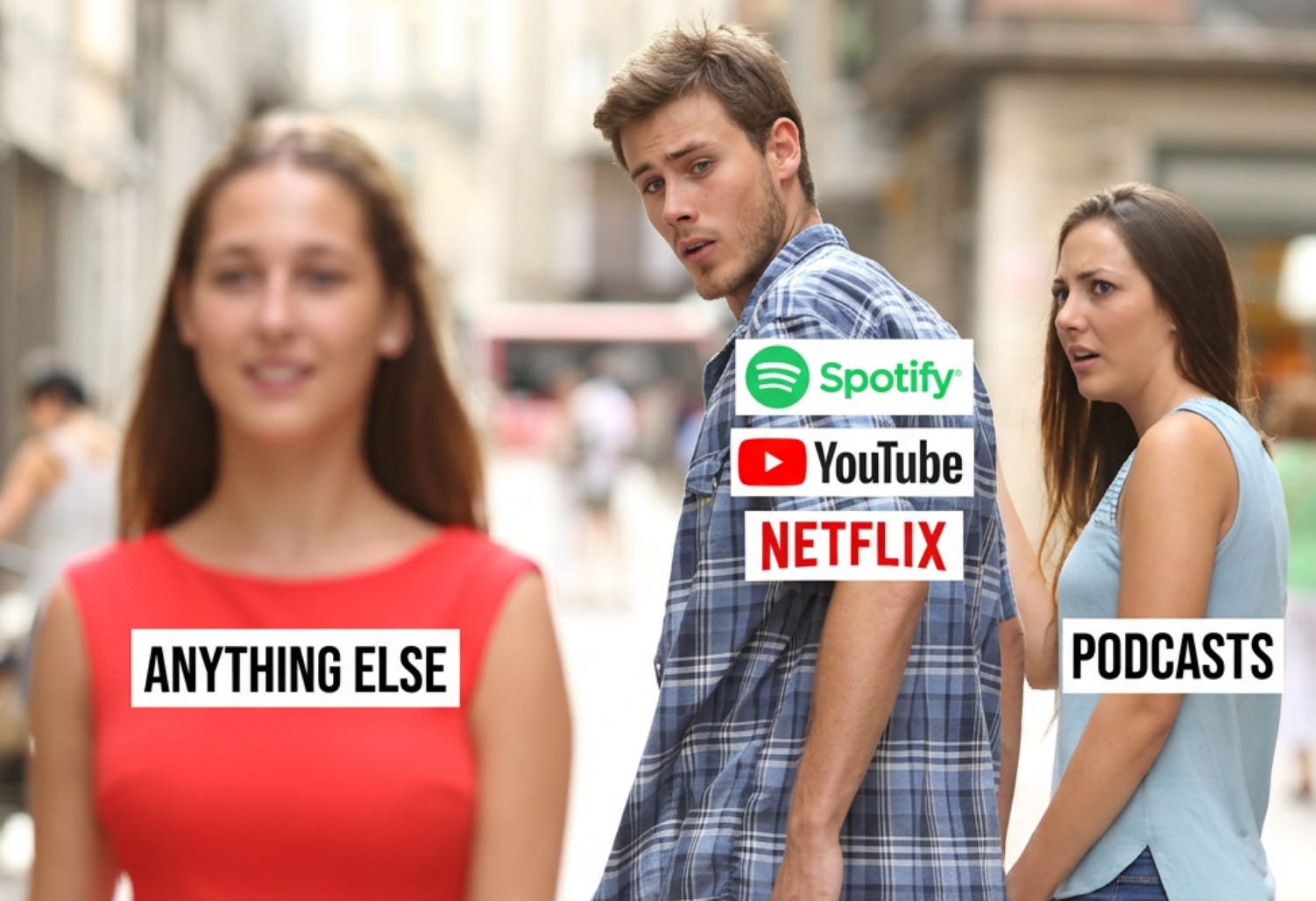
Tom Webster’s keynote was blunt. He told the room to go read the earnings call transcripts of the platforms that move the most podcast listening today. I did that this week, and it backed up exactly what he was getting at.
YouTube’s parent company held its Q2 call this summer and talked at length about Search, Cloud, AI Mode, CTV advertising, and a slate of exclusive creator shows. Podcasts didn’t come up once.
Spotify’s Q2 call mentioned podcasts exactly one time, folded into a single sentence about ad monetization next to music, with no separate numbers and no separate strategy.
Netflix has been asked directly about its podcasting plans twice this year. In the spring, Ted Sarandos called it “very early days.” By summer, he mentioned it in the same breath as vertical video clips and new print publisher deals, then said “let’s not pre-announce anything” and moved to the next question.
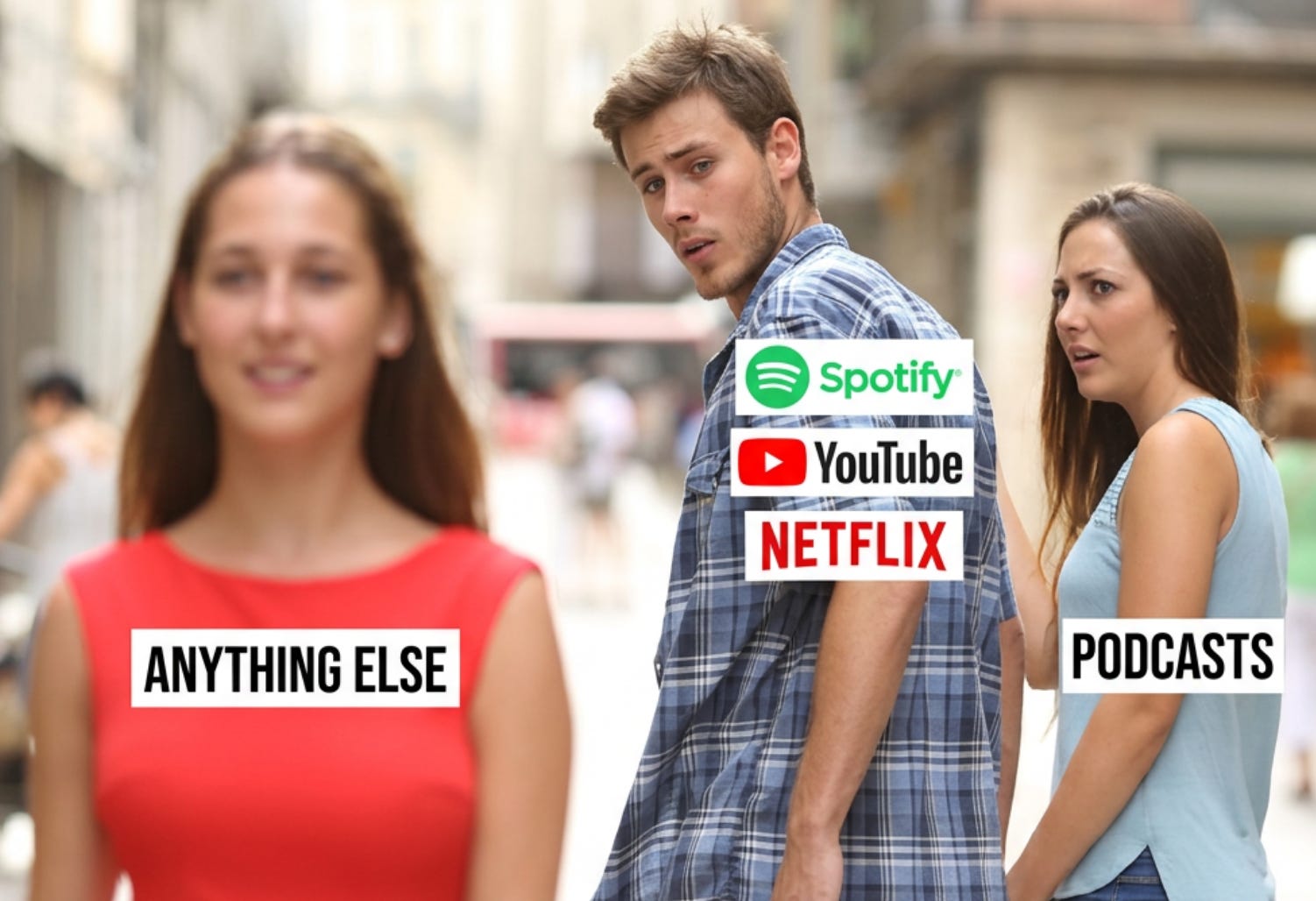
Three different companies, three different businesses, and the same result. The platforms doing the most to shape how podcasts get discovered and consumed don’t think of themselves as podcast companies. They think of themselves as attention companies that happen to carry podcasts.
Yes all that Marketing Advice for Your Podcast is BS
Also at PM26 Rob Walch’s terrific presentation. It’s actually a case he’s been making all year. The industry doesn’t have a discoverability problem. Individual shows have a “nobody’s found my show yet” problem, and those aren’t the same thing.
The clearest example is the advice to rate and review your show. It doesn’t move the needle the way people think. What Apple actually weighs is total all time subscribers, so the call to action that matters is follow this show, not leave a review. Ask for the review after they’ve followed, not before.
The other habit worth breaking is confusing social reach with podcast audience. Walch has tracked cases of creators with millions of social followers pulling in a fraction of the downloads you’d expect, and cases of shows with a few thousand downloads an episode quietly outperforming almost everyone in their category without realizing it. If you’re judging your show against your Instagram numbers, you’re measuring the wrong thing entirely.
Clauding Your Transcript
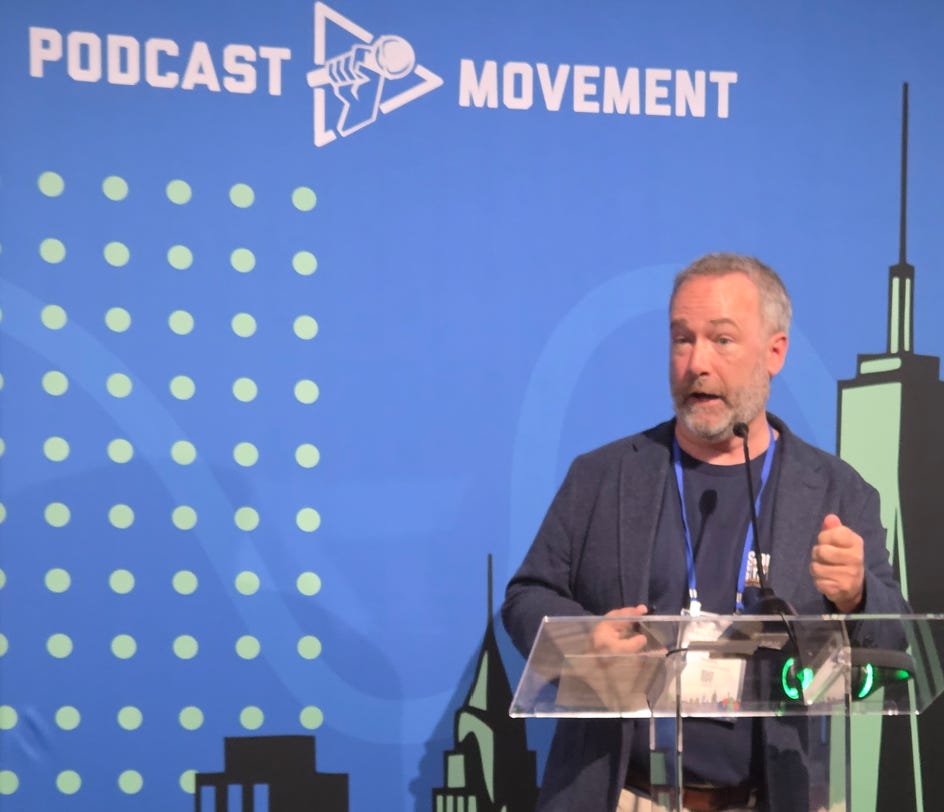
Then there was my own time on stage. I talked about what I see as a quietly growing and alarming trend. People just grabbing your episode transcript and running it through Chat GPT or Claude and never listening. The problems with that:
no para social bonding
no trust built
no community
no monetization opportunity
no one actually remembers the information (I referenced the 2011 Google Effect studies to prove that)
Even when the AI summarizes wrongly - we tend to vigorously defend the summary
The solution, I suggested, is to build shows that offer an experience rather than extractable content. For example, imagine two different titles for the same episode. Example one, IMO, overtly suggests this is just extractable content and invites people to just grab the transcript. Example two suggests the episode is something we experience together:
Five Things in Your Kitchen that are Poisonous
I Asked a Poison Expert to Walk Through my Kitchen with Me
How Important is Your Cover Art?
The last piece today isn’t from Podcast Movement. It’s something the amazing pointed out in a LinkedIn Post. My take on this is only my own, I’m not suggesting Stephanie does or doesn’t share my opinion.
It was about the importance of cover art. Look at the table below from Edison Research.
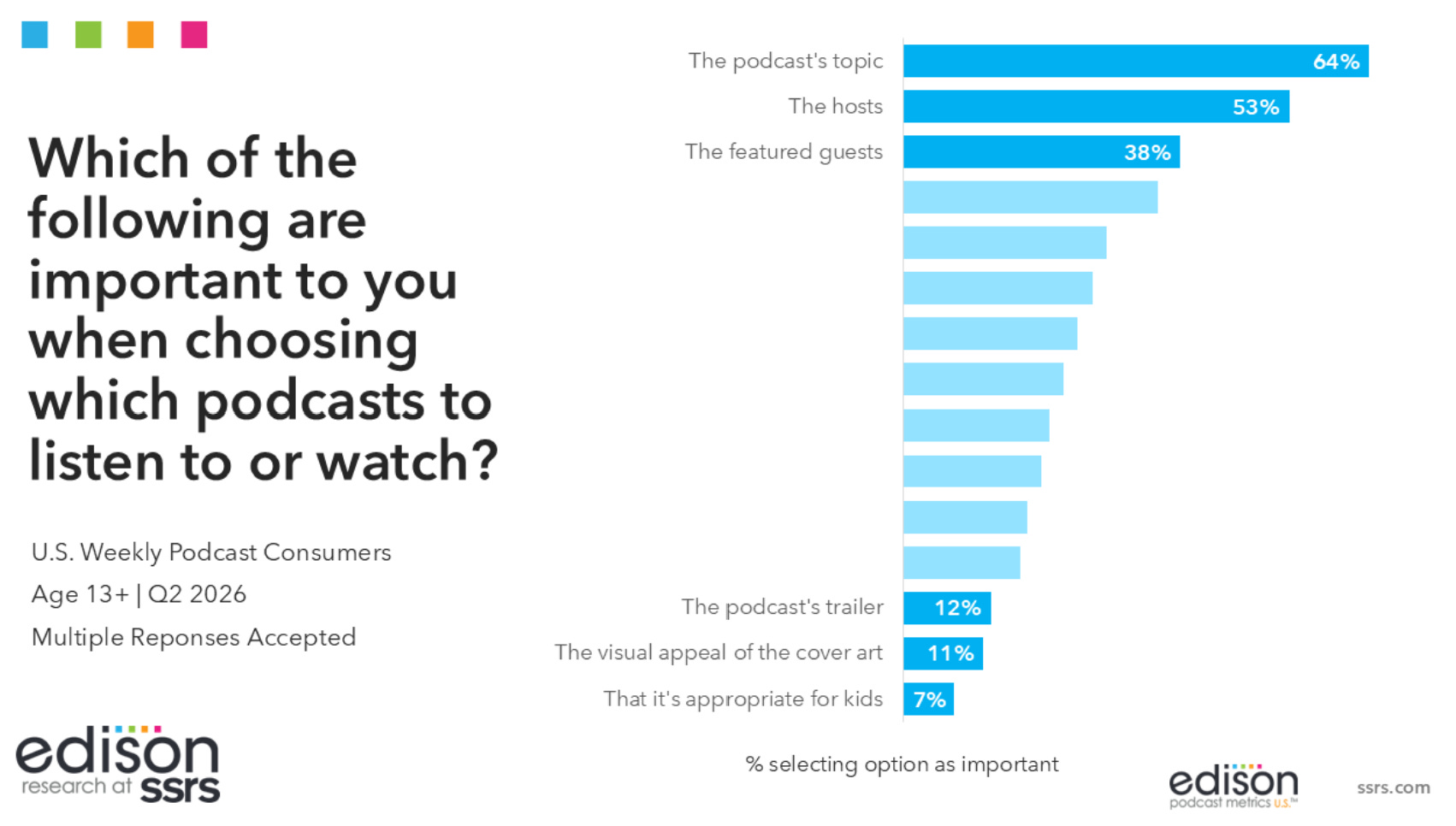
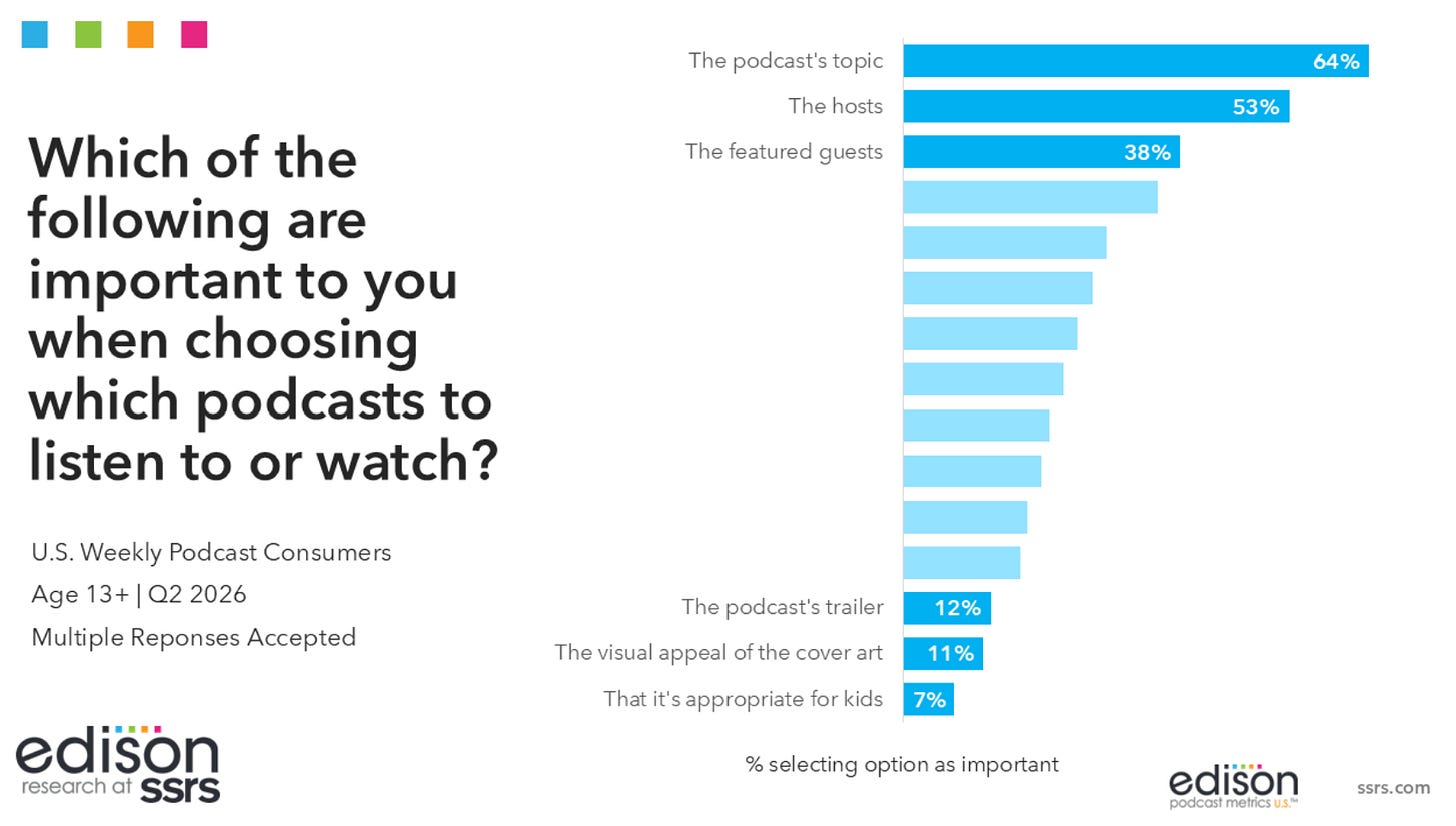
Edison is a first class survey company, I have no doubt this is exactly what they found. It shows when people choose a podcast to listen to or watch, the appeal of the cover art is only 11% of the decision.
I just don’t believe it’s what people actually do.
Surveys are great at capturing what people believe about their own behavior, and often terrible at capturing the behavior itself. Ask people how often they exercise and you’ll get a number well above what their gym check ins show. Ask people how much they sleep and you’ll get eight hours reported against a wearable tracking closer to six. Nobody is lying on these surveys. They’re answering the question honestly according to how they see themselves, which is not the same as answering it according to what they actually did last Tuesday.
We tend to answer surveys aspirationally and no regular podcast listener wants to think they make their choices based on artwork… we all want to think we make frontal lobe choices based on intellect like topic choice or guest.
Meanwhile the scroll happens in under a second and the art is the only thing that had time to register before the thumb kept moving.
Here’s the tell. Major production companies routinely have someone spend three to four hours on a single YouTube thumbnail. Nobody spends four hours designing something that only moves 11% of the decision. They spend that time because they’ve watched their own analytics and they know better than any survey response what actually gets the click. A podcast cover inside an app is smaller than a YouTube thumbnail, but it’s operating on the exact same principle: it’s the first and sometimes only visual signal a scrolling thumb gets before deciding whether to stop.
If you’ve been treating your cover art as a checkbox because a well respected study told you it barely matters, I’d reconsider.
And if you pick a movie on Netflix tonight, I’ll bet the cover image played a huge part in that decision.
Our Website Let's connect on LinkedIn Our YouTube channel The Stories and Strategies podcast on Apple, on Spotify And on YouTube