
The Announcer Is Obsolete. Your Host Just Got More Valuable
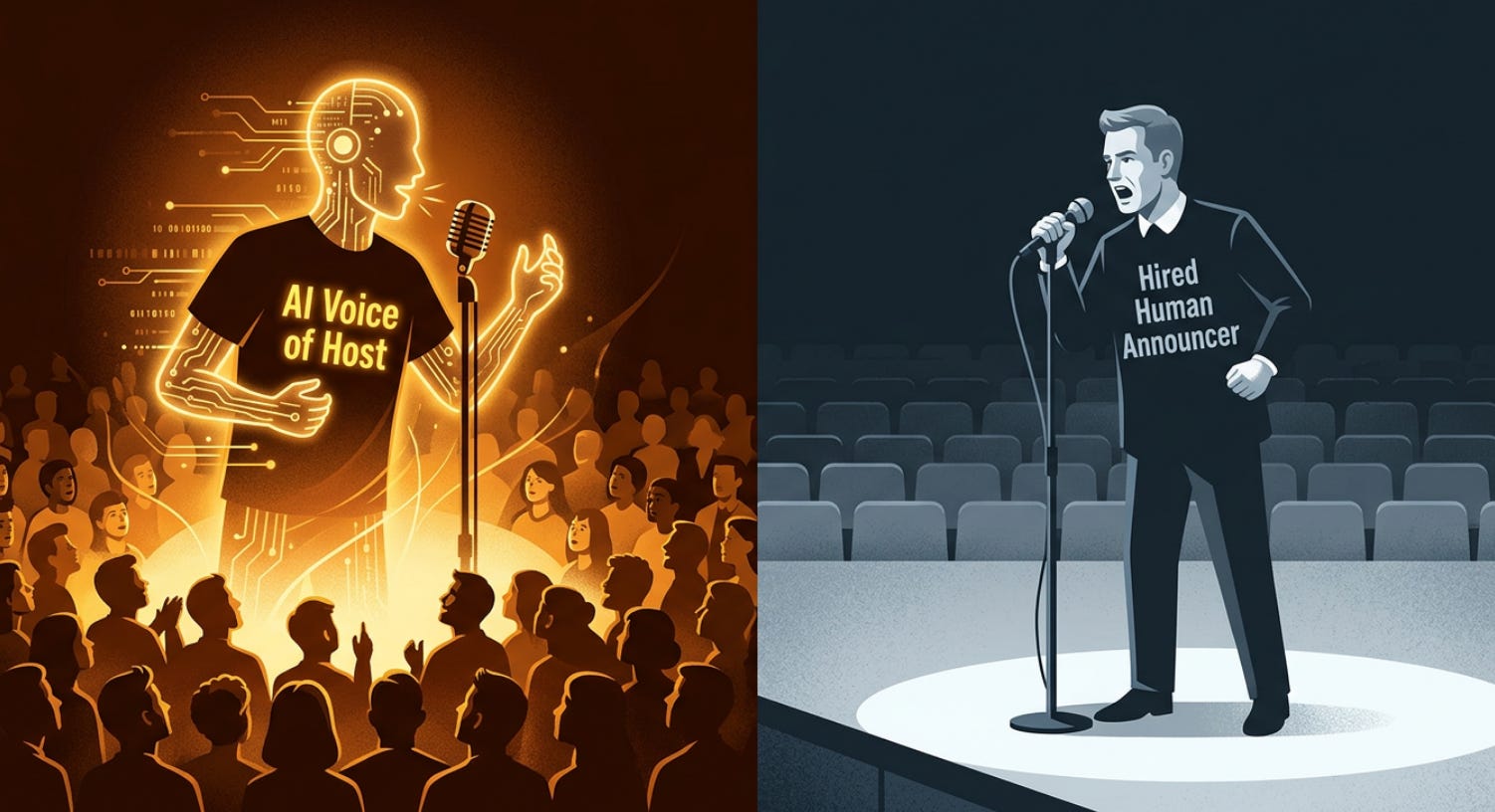
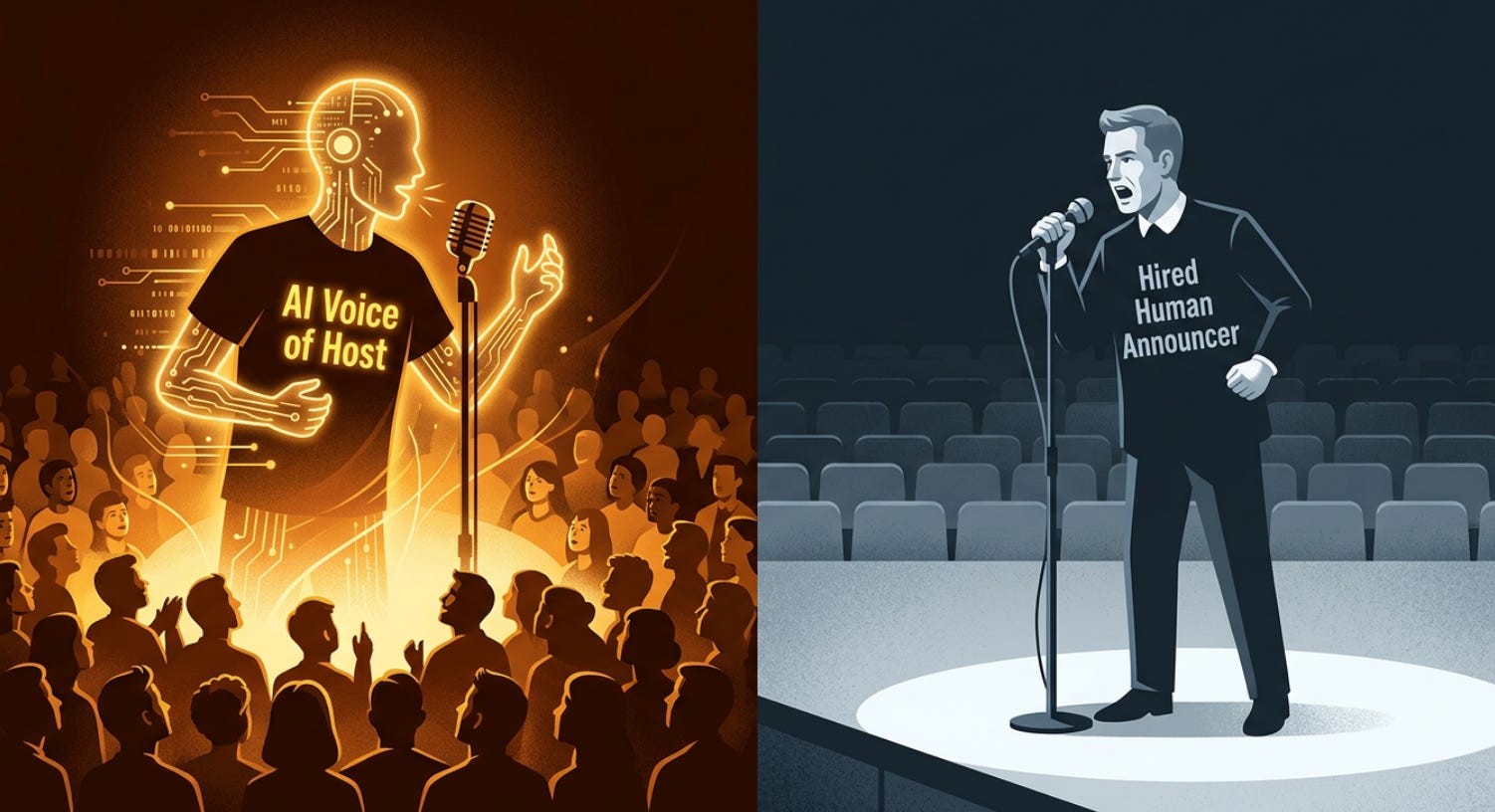
The New York Times (paywalled) just quantified something a lot of podcasters have suspected for a while. Cloning your own host's voice for ad reads beats hiring an outside announcer by 26 percent on listener engagement, because your audience already trusts that voice and an outsider never fully earns it.
But the same research shows the host reading it live still outperforms their own AI clone by 9 percent, so the trust isn't really in the voice, it's in the person actually being there. That gap matters more than the headline number.
A Canadian research team at MacEwan and Toronto Metropolitan University is now digging into exactly why, running listeners through paired human and AI samples of news podcast hosts to see what they can detect and how it changes their sense of authenticity. Their framing is the one I keep coming back to: a host's voice isn't just information, it's an emotional performance that builds trust with the listener, which is precisely what makes cloning it a much bigger decision than cloning some random narrator nobody has a relationship with.
People are Clauding your show, and it’s a rational choice
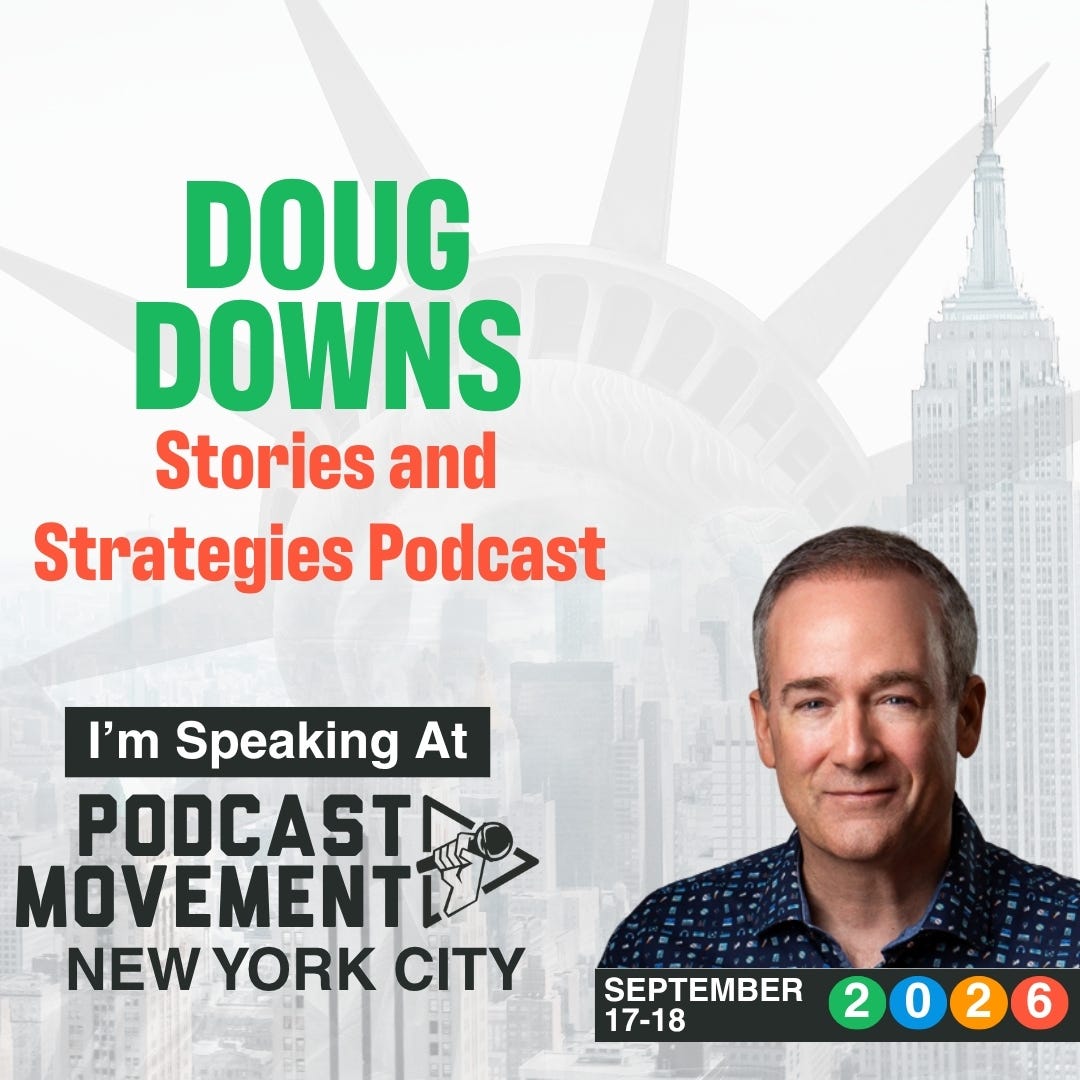
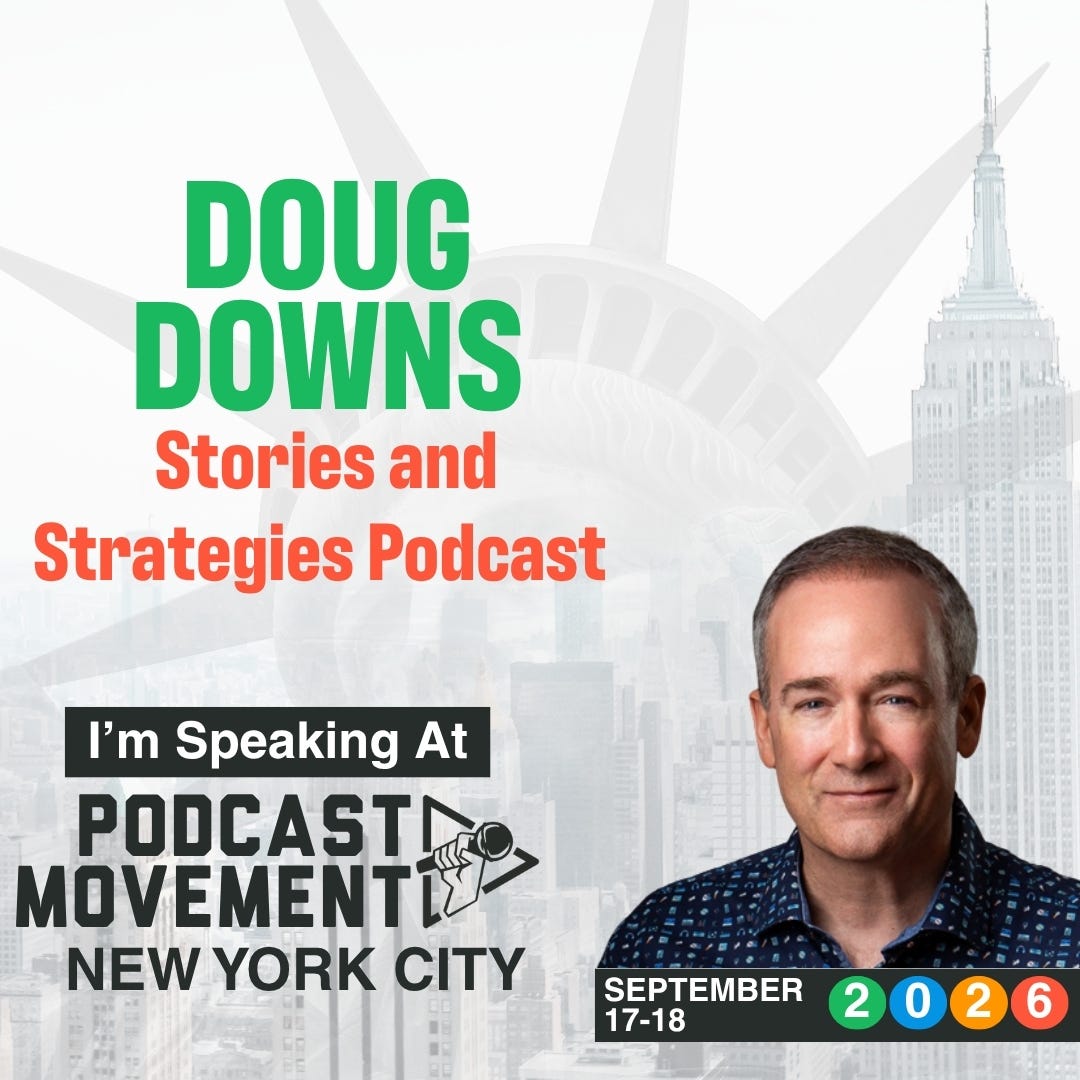
Tomorrow morning at Podcast Movement in Manhattan, I’m telling a room full of podcasters something they don’t want to hear: their listeners are pasting transcripts into AI tools, pulling three bullet points, and moving on with their day. No download. No ad impression. No relationship. Just extraction.
The instinct is to call this laziness. It isn’t. It’s rational. If a podcast feels like extractable content, listeners will always take the fastest route to the information inside it. A 40 minute episode competes with a 30 second summary, and if information is genuinely all a show is offering, the summary wins every time.
The behavioral science backs this up further than most producers realize. A recent Wharton study found people confidently accept, and even defend, wrong AI-generated answers up to 80% of the time. People aren’t just outsourcing effort to AI. They’re outsourcing judgment.
Which is why the useful question isn’t “how do we stop AI summarization.” It’s sharper than that: what does your podcast offer that a transcript can’t fake? A host’s voice, the texture of a live conversation, the trust built over a hundred episodes, none of that survives being flattened into bullet points. If your honest answer is “nothing,” the summarizing was never really the problem.
I’ll be unpacking this at Podcast Movement 26, Level 2E, just after 10am, if you’re around.
One Podcast Description Is Costing You Discovery on Two Platforms
Most podcasters write one show description and paste it everywhere. Turns out that might be costing you twice.
John Taylor points out that Spotify and Apple often cache your channel description separately from the episode metadata flowing through your RSS feed. Update your description at your hosting platform and it may update your episode titles just fine while leaving the actual channel description untouched on Spotify and Apple. The workaround is to skip your hosting platform for this one edit and go directly into Spotify for Creators and Apple Podcasts Connect to change the channel description in each place.
Second, once it’s actually live, Taylor argues you should be writing two different descriptions. Spotify’s own guidance says the first 250 characters carry outsized weight for search and recommendations, so front load audience, subject, and keywords immediately. Apple’s discovery logic runs more on a “who it’s for, why this host” structure, so the same information needs different ordering.
Check whether your last description edit actually stuck on both platforms, then stop writing one description for two different search engines.
Is Podcasting’s Noise Problem Outweighing its Discovery Issues?
is tired of podcasting.
Not the making of it, but everything piled on top: the platform wars, the video mandates, the chart obsession, celebrities parachuting in with more listeners by Tuesday than an indie built in three years. His point isn’t that podcasting is broken. It’s that we’ve buried a simple idea under an arms race of formats, metrics, and hype.
Two things in his piece are worth spending time with. First, don’t assume your old episodes are dead content. He points to an experiment by testing whether better show notes, written for search and AI discovery but still edited for humans, can bring old episodes back to life. Second, if your host doesn’t give you transcripts, he’s got a workaround using Google’s NotebookLM with a prompt built to preserve speaker voice instead of flattening it into robotic summary.
Worth the read if you’ve ever felt like keeping up with podcasting has started to crowd out actually making one.
Our Website Let's connect on LinkedIn Our YouTube channel The Stories and Strategies podcast on Apple, on Spotify And on YouTube