Podcasting’s Studio Arms Race Is Eating Its Own Cost Advantage
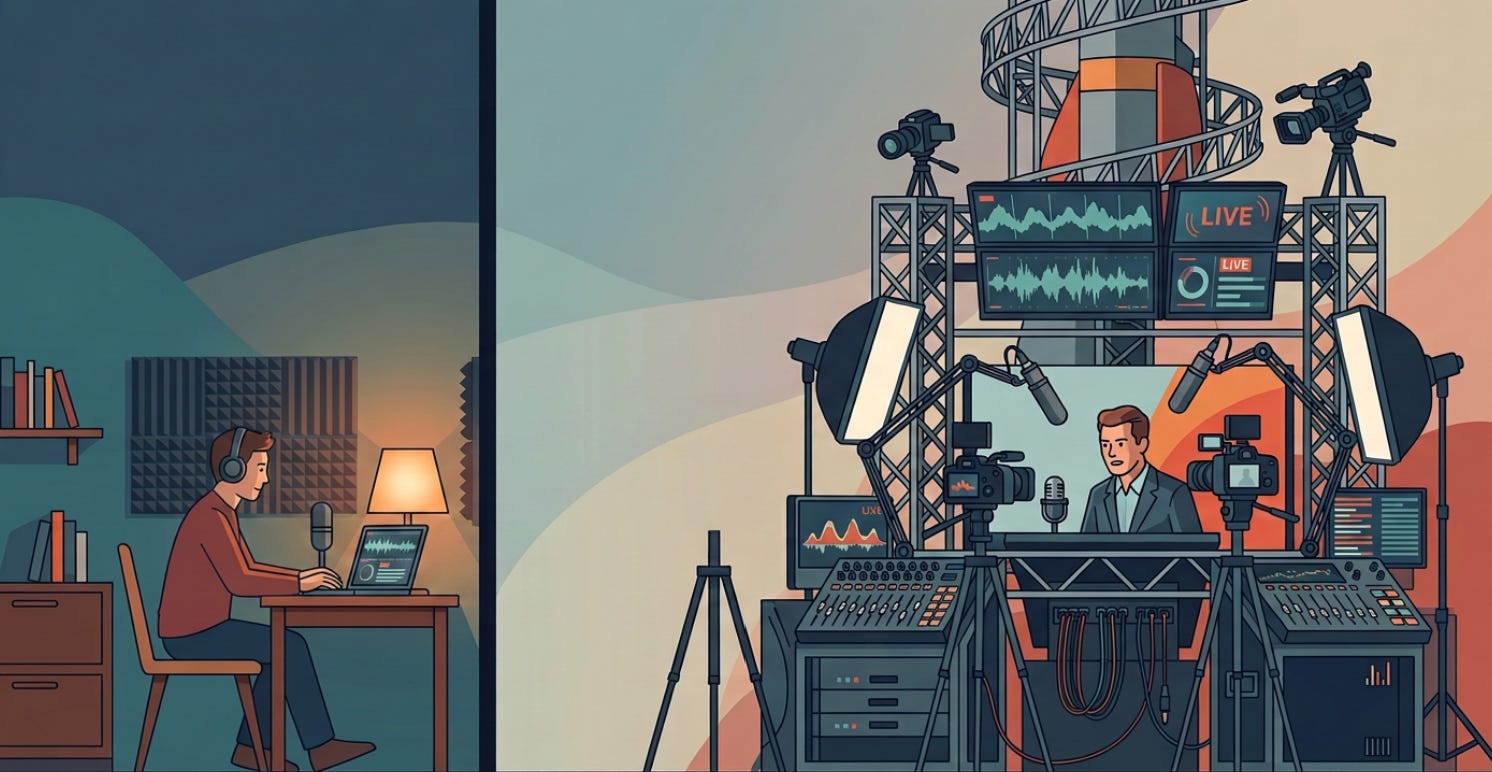
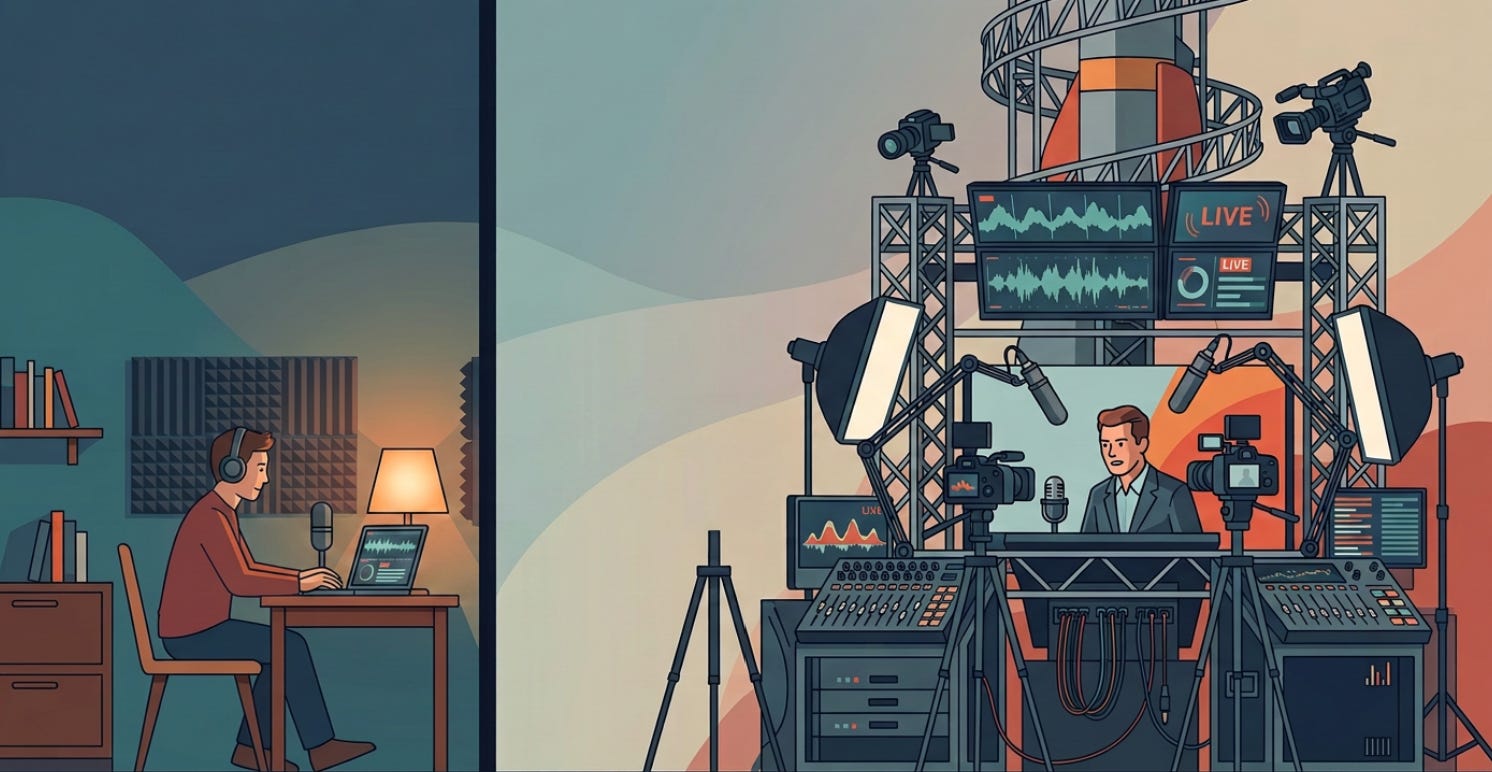
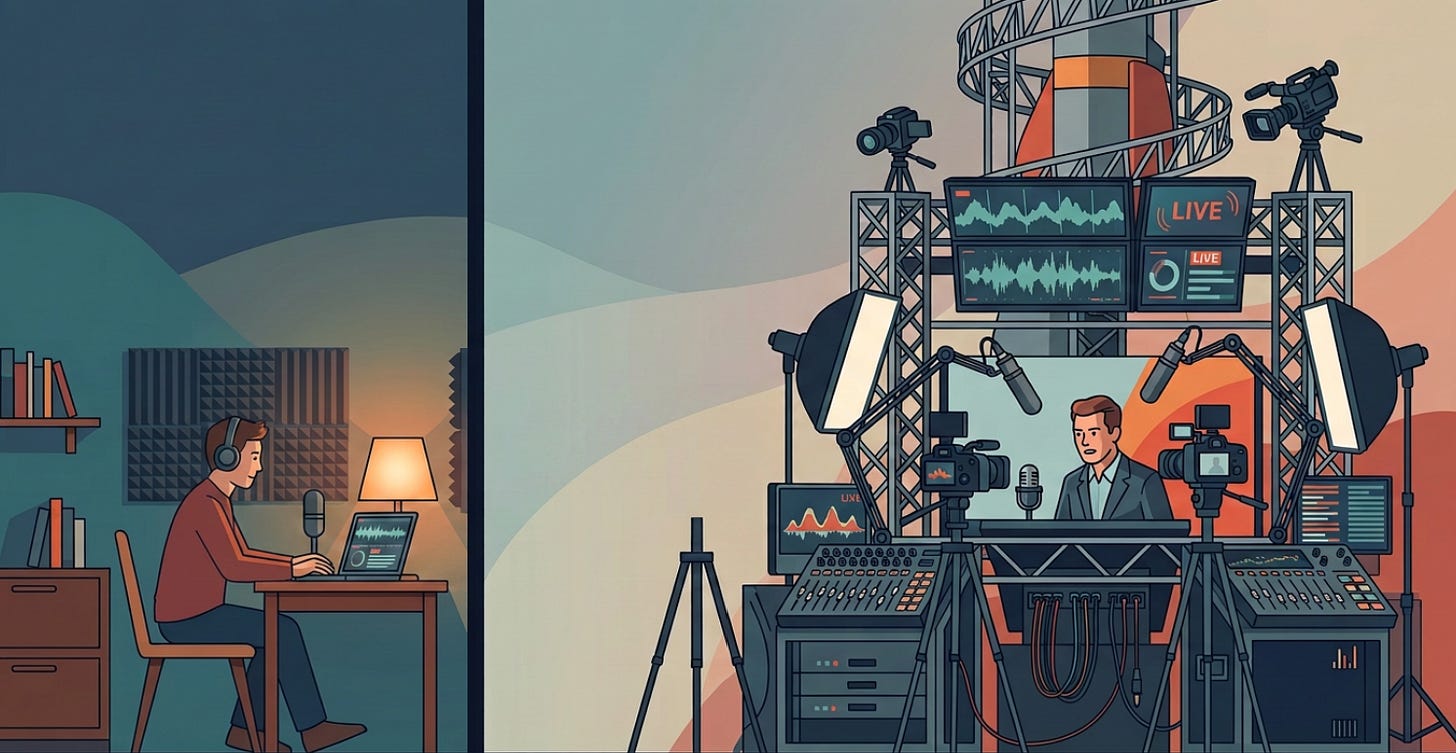
Ten years ago a podcast studio was a closet with a decent mic. Now it’s an 11,000 square foot facility in Hollywood, a poolside build at a Bahamas resort, or a set designed to look like an HGTV renovation. In another great article in Forbes by , Podcast sound consultant Danny Catalano says even before video entered the picture, indie audio quality had already caught up to the networks. Video is what turned “good enough” into an arms race.
That race has real winners, and you’re not one of them. Sorry, you’re not.
Spotify runs multiple studio complexes across LA, London, and Stockholm. iHeart partnered with Baha Mar to build a full production studio into the resort’s pool deck, part cafe, part creator residency program. These are spaces built with corporate capital, and no indie host is going to outspend Spotify or a luxury resort chain on square footage and lighting rigs.
Streaming platforms bet on video podcasts as a cheap alternative to scripted talk shows. Joe Rogan pulls in roughly $80 million a year and Jay Shetty just signed a video and audio deal with Spotify and Netflix worth about $100 million. As studio and production costs keep climbing to meet that bar, the cost advantage podcasting had over traditional TV starts to shrink. The arms race isn’t just pricing out indies, it’s quietly undermining the economics that made video podcasting attractive to platforms in the first place.
So if you’re an indie podcaster looking at photos of Baha Mar’s poolside studio and feeling behind, stop. That comparison isn’t yours to make. You can’t win a spending contest against a resort chain or a major label, and trying to will burn money you don’t have on a problem you don’t actually need to solve. , host of Honey and Hustle, says it best, “You don’t need a creative studio to be legit, you need a repeatable setup and fewer decisions between you and the work.”
Spend your money there instead.
Oh and PS, 90% of all podcast consumption remains audio right now.
Stop Checking the Wrong YouTube Click Through Rate
Ask most podcasters what happens if their YouTube subscribers don’t like a new episode and the answer is always the same. It tanks. But YouTube’s senior director of growth and discovery Todd Beaupré says that’s not how the algorithm works, and the real explanation should change which number you check first.
Most engagement metrics on your dashboard are contaminated by audience mix. A video can look weak because it reached a colder audience (people who DON’T subscribe to your channel), not because the content was worse. Beaupré points to one number that isolates that variable: subscriber feed click through rate. Even top performing videos typically see under 10 percent of subscribers click through, and he says that’s normal, not a red flag. Since that traffic pool doesn’t change from video to video, it’s the only genuinely apples to apples read you have on whether your title and thumbnail actually earned attention from people who already chose you, separate from whatever the algorithm decided to do with everyone else.
If you’re running a video podcast on YouTube, that’s the number worth pulling before you look at aggregate views or overall CTR.
300 Downloads in One App - Zero in Another - Same Episode
Last week Podbean tried to fight AI and crawler traffic clogging up its podcast analytics. Good instinct. Necessary work, honestly overdue across the industry. The filter they used though marked every download from Apple Podcasts as invalid. at Podnews found shows with hundreds of plays sitting in Apple Podcasts Connect and zero in Podbean’s own dashboard for the same window. Podbean owned it fast, told affected customers what happened, and by the next day Podnews was reporting the numbers were back to normal. That’s about as clean a response to a bug as you’ll see. This isn’t a Podbean problem.
What caught my attention is Podbean is IAB 2.2 certified. That certification didn’t catch this, couldn’t have caught this, and stayed technically valid the entire time the numbers were broken.
I have some version of this conversation with clients almost every month. Not usually because a platform broke, just because two numbers don’t agree and someone wants to know which one is true. And the instinct, mine included for years, is to go find the “real” number and report that one.I don’t think that’s the right instinct anymore.
Downloads are useful as a rough trend line and useless as a verdict on whether a show is working. What I’ve started bringing to client conversations instead is time spent per episode, completion rate, and the stuff that never shows up in any dashboard at all. Someone mentioning the episode to me at a conference. A comment on LinkedIn from a person I’ve never met. A client telling me their own customer brought up the show unprompted in a sales call. None of that shows up as a download and all of it tells me more about whether the show is landing than a number that can silently drop to zero because of a filter update on the other side of the platform.
Does Your Business Need a Podcast?
From Acumen, the magazine of the Gordon Institute of Business Science (GIBS), comes a piece (on page 23) worth sitting with if your podcast still measures success by downloads.
Thanks to for bringing this one to my attention.
Most businesses that start a podcast are answering the wrong question. Gavin Kennedy of Solid Gold Studios says the mistake is treating every podcast like a media product, chasing downloads and audience size, when a branded podcast built to support business goals should be measured on outcomes instead: stronger client relationships, credibility, lead generation. He splits podcasts into three types: hobby, media, and business, and says most companies default to media thinking even when their actual objective is business thinking. His advice is to start with the outcome, not the format, and to ask what you’re trying to achieve before you buy a microphone.
Podcast Movement 26
Podcast Movement just added Tom Webster's Podcast Landscape 2026 preview and and tackling "WTF is a podcast in 2026" to its keynote lineup, plus Nissenblatt is leading a Hell's Kitchen walking tour that ties podcasting history to the neighborhood's own. I'll be at Podcast Movement too, presenting on how to keep people from just Clauding your episode instead of listening to it.
Other Stuff
Acast is partnering with Kit to make it easier for podcasters to launch newsletters and newsletter writers to launch podcasts. If you're still treating your newsletter as a side project instead of a core part of your podcast workflow, the platforms building the infrastructure for you disagree.
Cool Tool - Podspun builds a web site for your podcast FROM your podcast as well as social media assets
Cool Tool - Lantern.FM is a new remote recording service quite bluntly suggesting it’s using superior technology to Riverside.FM. I’m going to keep watching this one before recommending. Riverside is generally considered the top virtual recording software in the industry but I have to admit we’ve had some issues with it lately that are absolutely connected to Riverside and not bad internet connections or equipment used by guests
PodGround is handing out $500 each to two independent podcasters with three years or less under their belt, plus a year of free RSS.com hosting, in exchange for attending some virtual events and letting them use your story for promo. It won't fund a studio buildout, but if you're early and scrappy it's free money for gear or hosting costs you'd otherwise pay yourself.