
YouTube and Podcast “Listening”
I have spent the last few years trying to understand where podcasting truly fits inside YouTube for real audiences rather than theory.
At different moments it felt like YouTube was just a discovery layer, then a growth hedge, and eventually a destination of its own.
Just when I thought I had landed on a clear answer, new data keeps pushing me to rethink it.
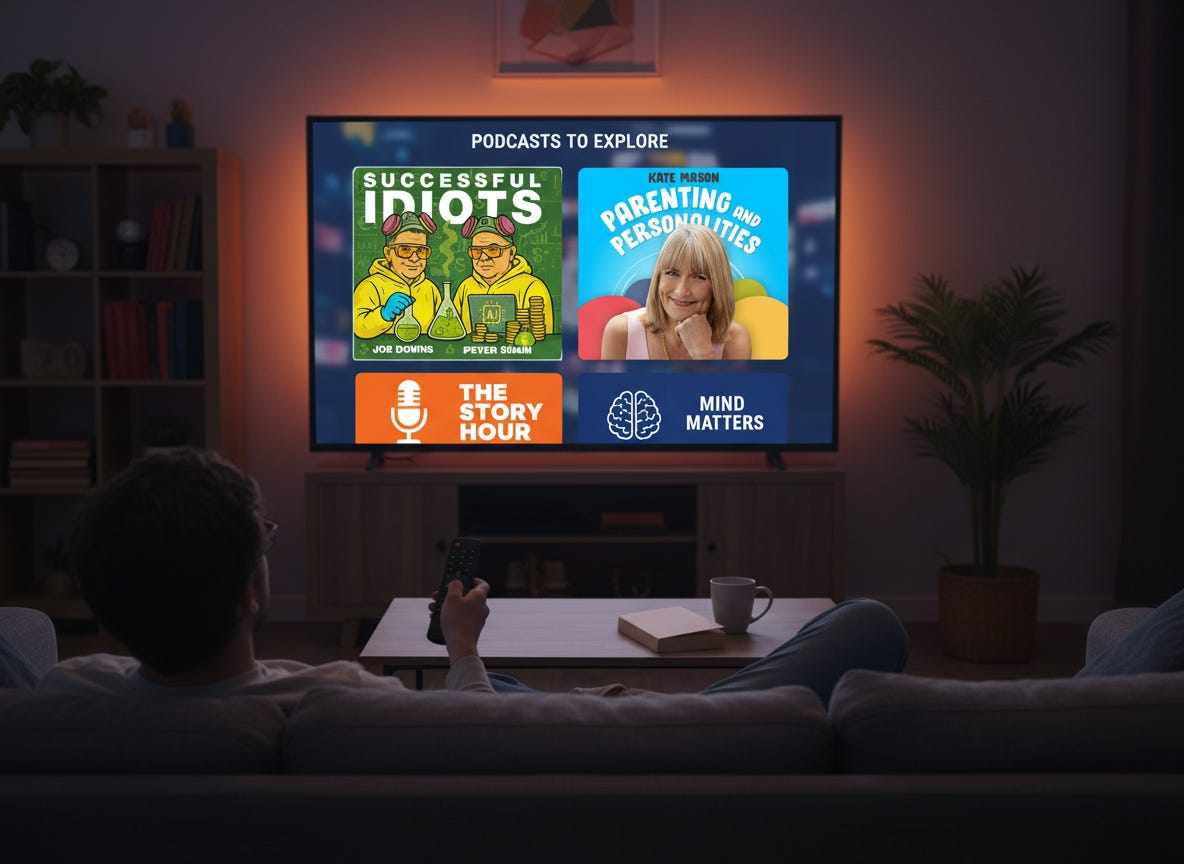
A recent Bloomberg article does exactly that by showing how dramatically podcast consumption on TVs is accelerating.
In October alone, people watched more than 700 million hours of podcasts on YouTube on their televisions, nearly double the year before.
That shift matters because it reframes podcasting as something people intentionally sit down to watch, not just something they press play on while multitasking.
Podcasts are now living room media
Video first strategies are no longer optional if you want sustained discovery and scale
YouTube is increasingly acting as the default TV network for podcasts
Platform diversification is speeding up as Spotify, Meta, and Netflix all try to counter YouTube’s momentum.
At the same time, there is important commentary from Sounds Profitable that complicates the picture.
Their research and analysis suggests that many listeners discover podcasts on YouTube but then choose to listen regularly on Apple Podcasts or Spotify.
That perspective doesn’t contradict what Bloomberg is showing so much as it completes it.
YouTube appears to be where people browse, sample, and decide what is worth their time.
Once that decision is made, long term listening habits often settle into audio apps built around routine and convenience.
The reality may be that YouTube is both the front door and, increasingly, the living room, while Apple and Spotify remain where loyalty and habit take over
Vodcasts?
We’ve seen this movie before, and a familiar mistake is creeping back into the conversation around so-called “vodcasts.”
Deloitte and a recent Wall Street Journal report suggest podcasting is becoming more video-centric, with global ad revenue for podcasts and vodcasts projected to reach $5 billion in 2026, up nearly 20 percent year over year.
They also cite higher consumption among viewers and a gap in self reported multitasking: 44 percent of vodcast watchers say they never multitask, versus 29 percent of audio listeners.
I’m not questioning those stats, I’m questioning the leap from self reported attention and discovery dynamics to a “video first” prediction about long term consumption, and advertisers should question it too.
There’s growing evidence Gen Z often treats YouTube like audio, and more broadly, what people say in surveys and what they actually do can be very different. This feels like the MTV era all over again: video reshaped discovery, but it didn’t replace audio habits.
The real tradeoff is that video can command attention in a moment, while audio earns a place in daily life, and that difference matters for memory, loyalty, and time spent.
If you want the full breakdown and the MTV parallel, I wrote the deeper blog here: Attention Isn’t Loyalty: The Quiet Advantage Audio Still Has.


Podcasts on Netflix
Netflix has shared guidance for viewers on finding and watching video podcasts, including using “podcast” in search to browse what’s available, plus subtitle support. The rollout is staggered, with sports arriving January 12 and other genres following on January 26, and the shows may include some advertising, though it’s not clear whether that comes from Netflix or the creators.
This podcast offering is US-only, and viewers in places like Canada will see that it isn’t available.
Podcasts Won’t Slow Your Driving Reactions, But Phone Calls (Even Hands-Free) Will
A new scientific study says talking on your phone while driving can slow your eye movements by about 20 to 100+ milliseconds, even with hands-free calls. It’s because the brain systems used for speaking compete with the ones that help your eyes spot and track things. Looking down already takes longer for everyone, and talking makes that delay even worse.
In contrast, listening to podcasts, audiobooks, or the radio doesn’t cause measurable delays.
Podcasts Good
Phone Calls Bad
In India
The Economic Times reports that some highly popular Indian podcasts offer interview slots in exchange for payments of roughly US $15,000–$30,000, and that these sponsored guest appearances often aren’t clearly disclosed to listeners. The report noted that failing to label paid promotions can breach Indian advertising rules and would also run afoul of FTC endorsement disclosure requirements in the US.
Our Website Let's connect on LinkedIn Our YouTube channel The Stories and Strategies podcast on Apple, on Spotify And on YouTube